

Modules / Validation
Ask for the decision once, and keep every version of the answer.
Send any asset to a colleague: a post, an article, a visual, a video, a file. They get a card on their board and a mail that opens it where it lives. While they decide, nobody can change it. They validate it or send it back with a comment, and you answer with a new version on the same thread. Nothing is ever deleted.
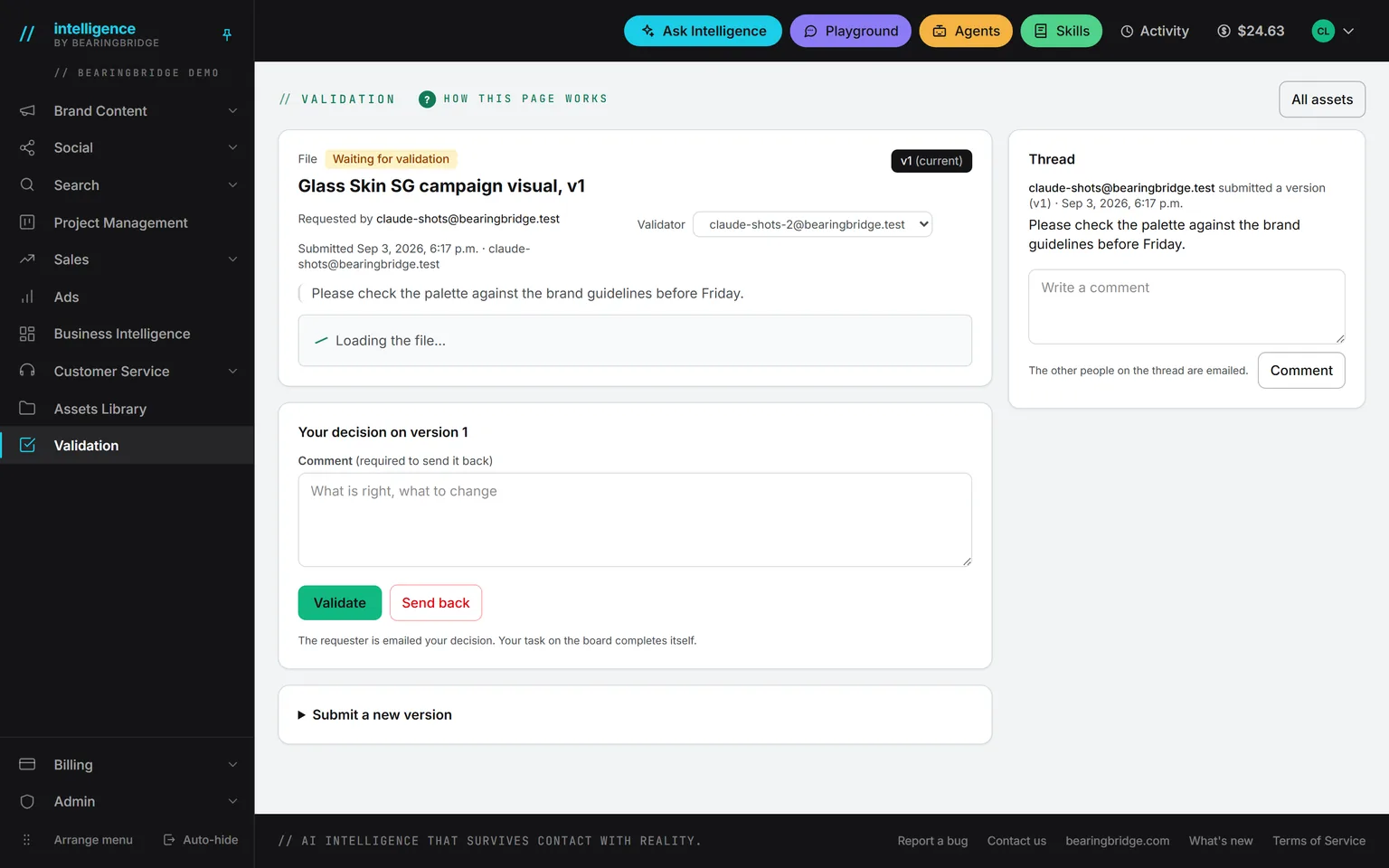
Demo workspace. Invented brand and figures.
Send, card, decide, again.
Send
From wherever it was made
A post, an article, a visual, a video, a file, a text, or an address. A title, a note, one validator.
Card
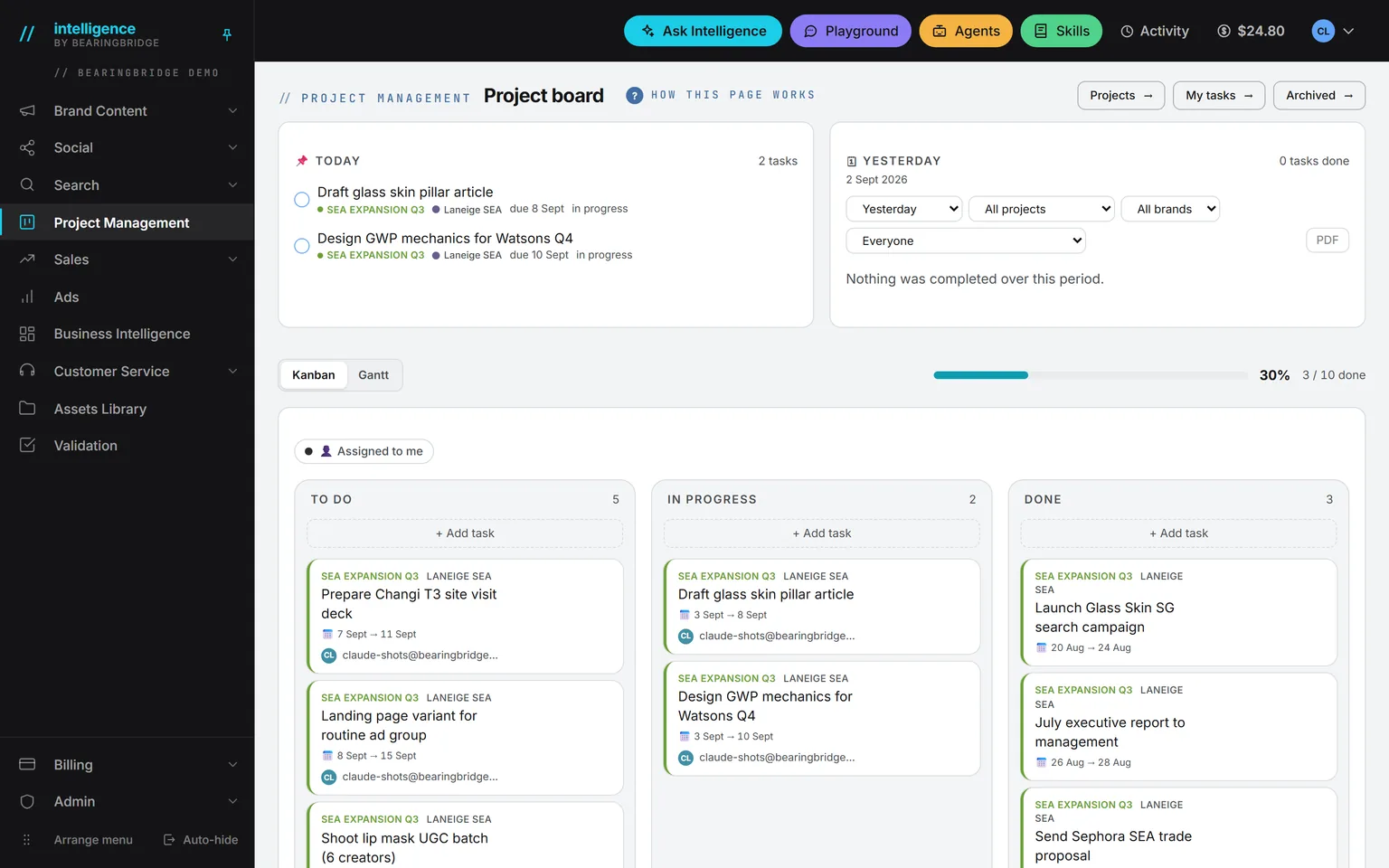
A task on their board
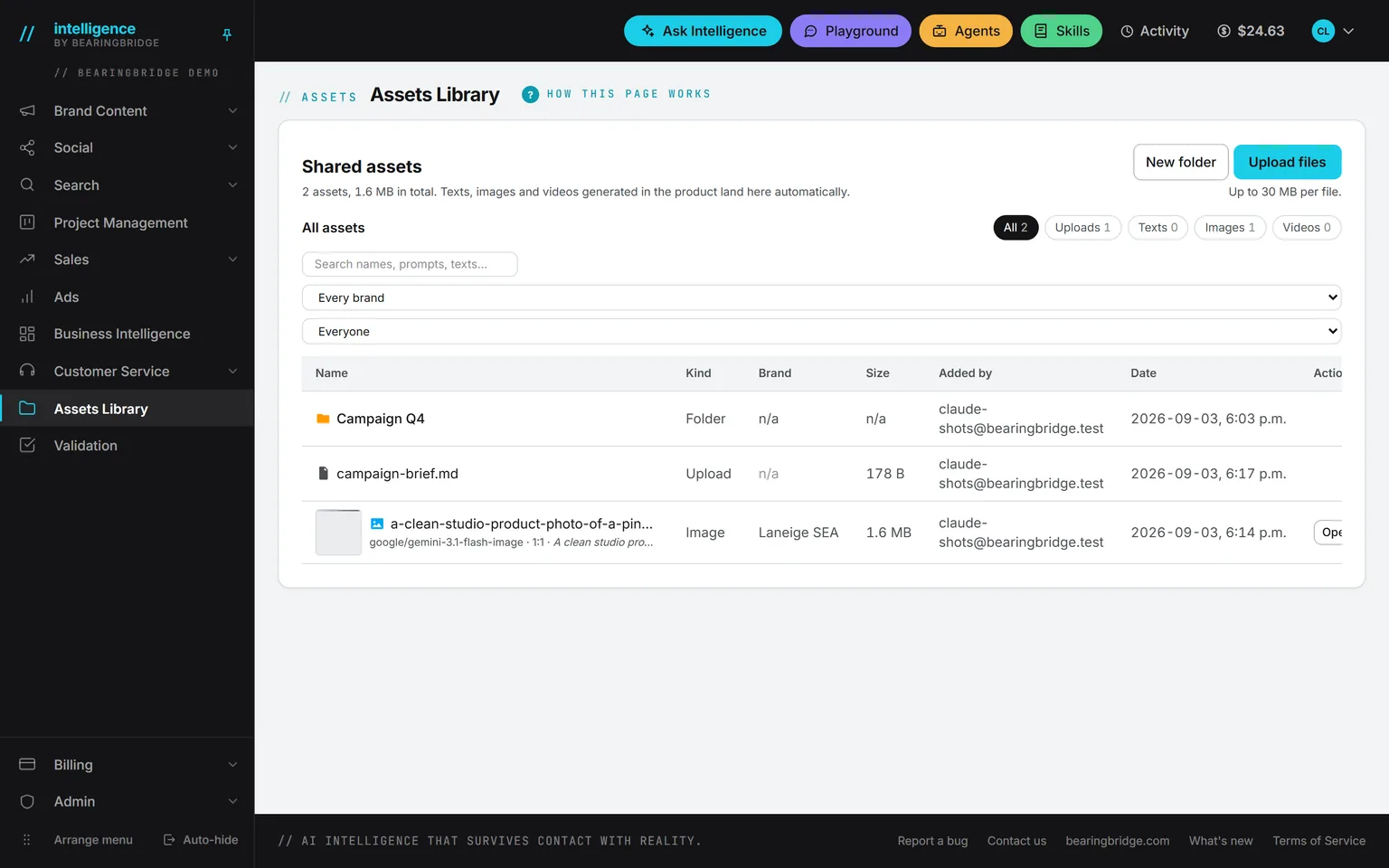
Created in To Do and assigned to the validator, named after the asset and its version. The mail opens it where it lives, in the Assets Library when it’s there.
Decide
Validate, or send back
A comment is required to send back. The piece stays locked until then, and the status follows the current version.
Again
A new version, same thread
A rejection is answered with version two on the same thread, sent to the same validator. The card reopens. Nothing from version one is lost.
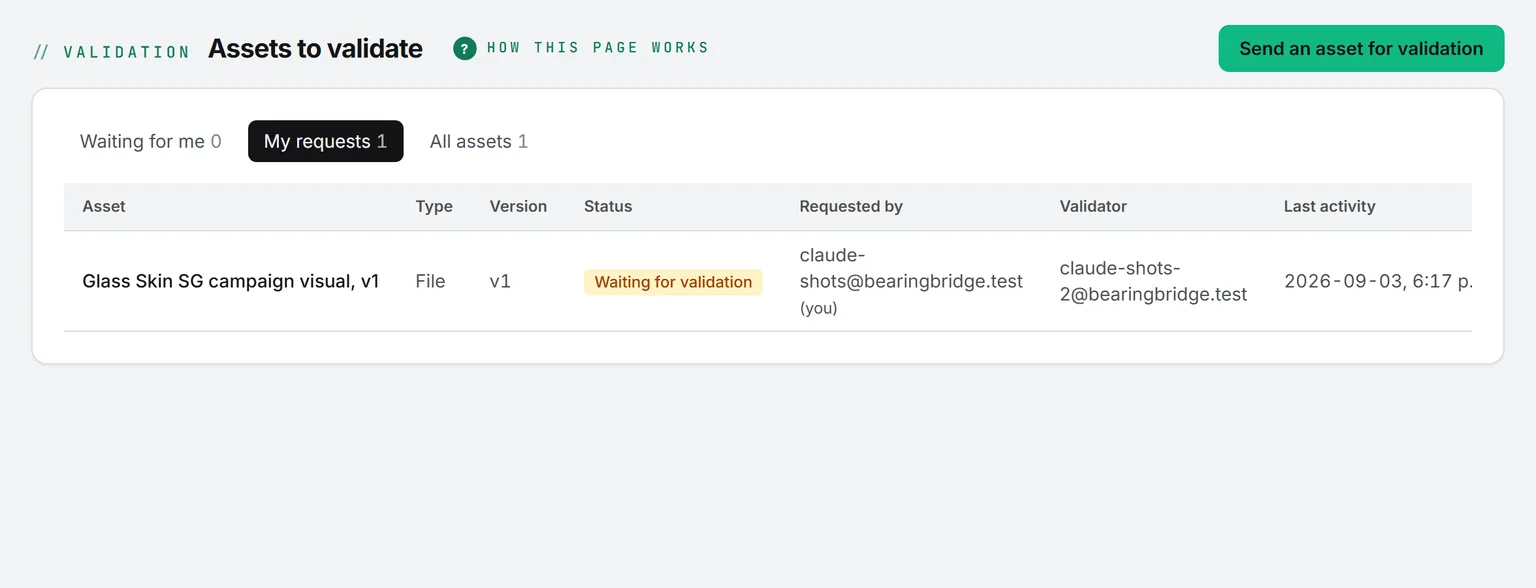
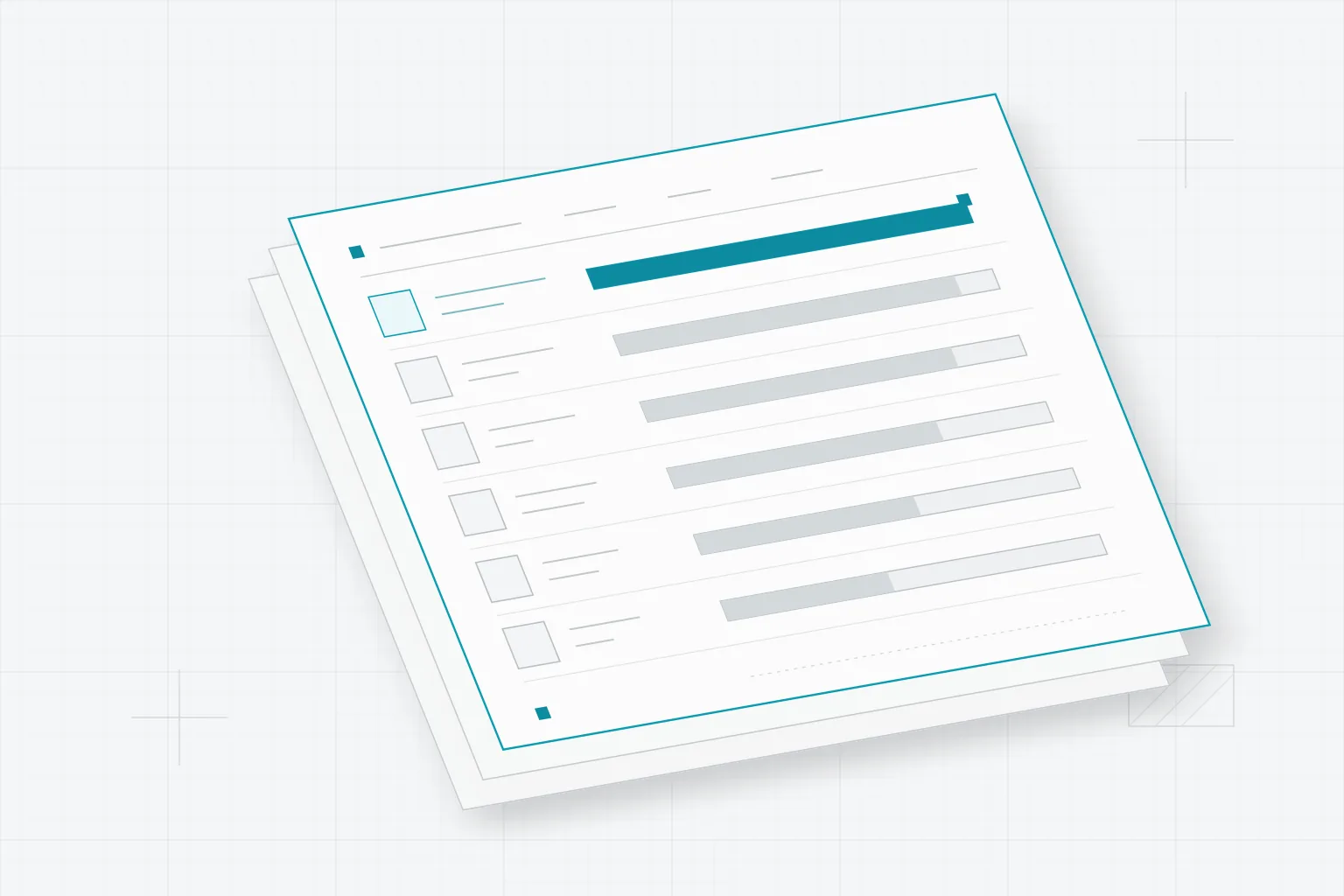
Two queues on one page: what waits for you, and what you asked for. A third tab shows everything in the organization. Each row carries its type, its version, its status, who asked, and who decides.
What was validated is what gets published.
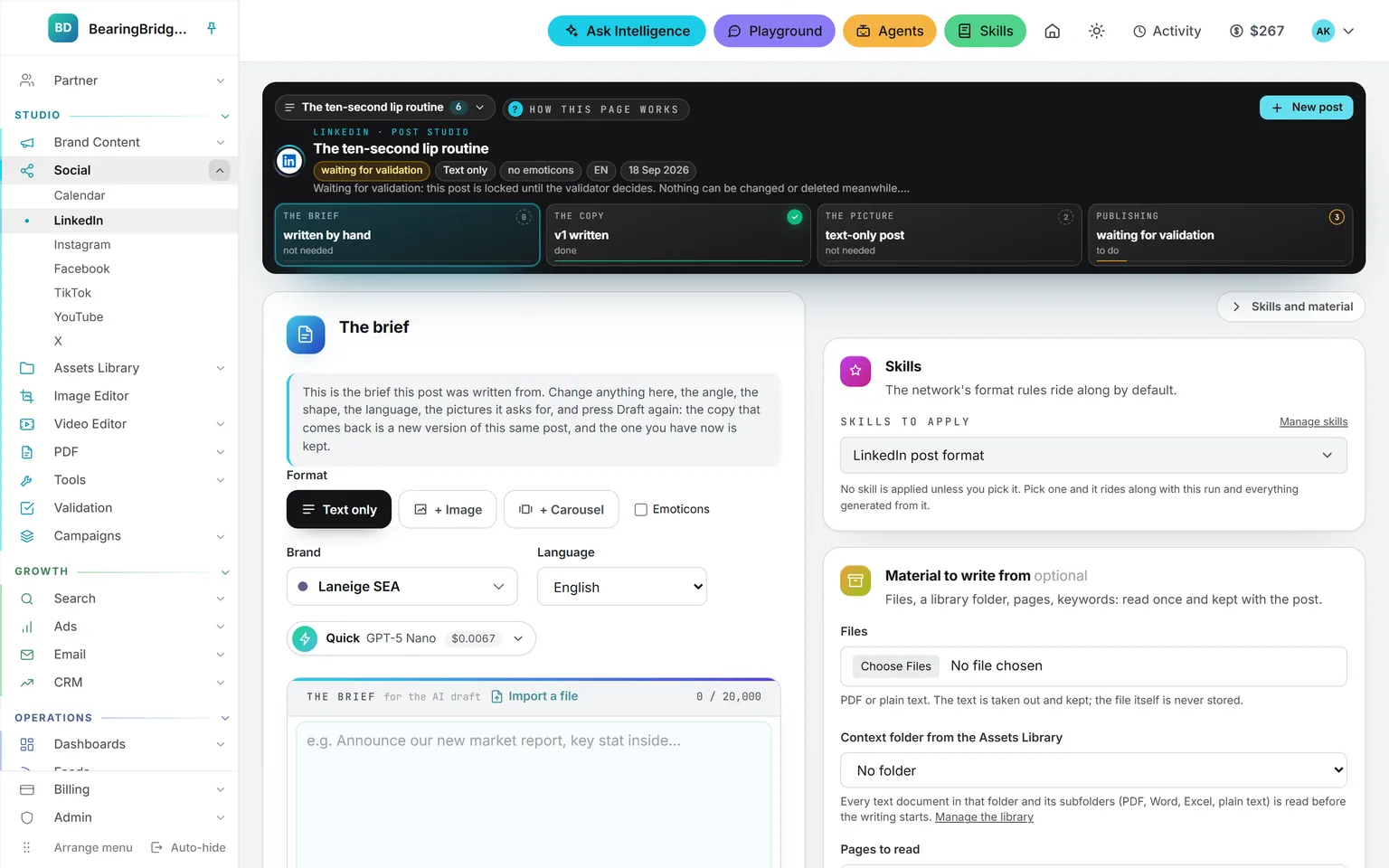
Send an article, a copy piece or a social post for validation, and neither it nor any earlier version can be edited or deleted until the validator decides. Validate it, and the piece is approved. Send it back instead, and it drops to draft until the next version. The lock is read from the validation record itself, so nobody lifts it by changing a status somewhere else.
The current version, the earlier ones, the thread, the decision.
The asset page renders the current version inline when it can: a text, an image, a video. Earlier versions sit under it. The thread runs down the side. The decision box shows the actions for whoever is looking: the validator sees validate or send back, the requester sees submit a new version, and an administrator sees both.
The six kinds an asset can be.
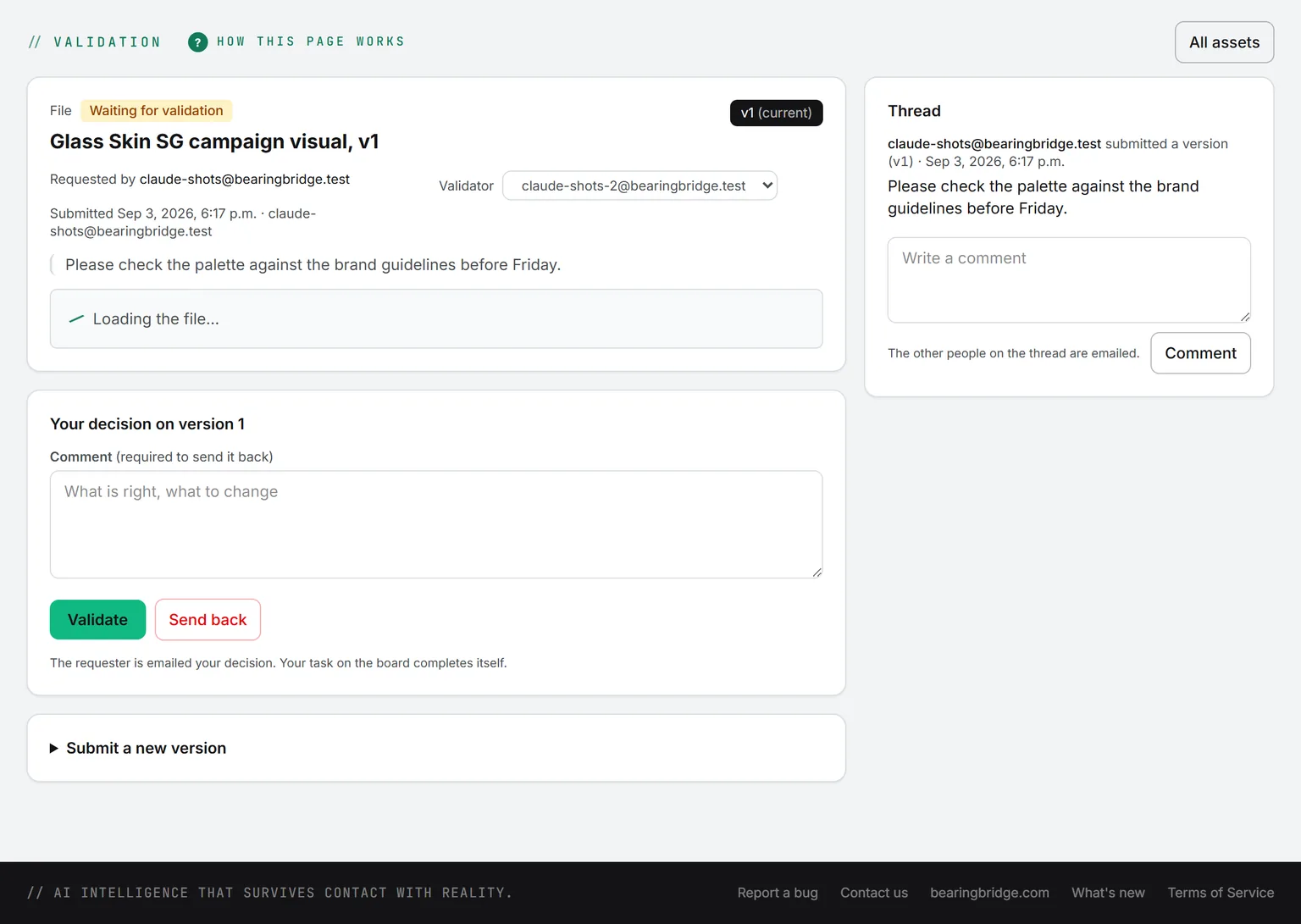
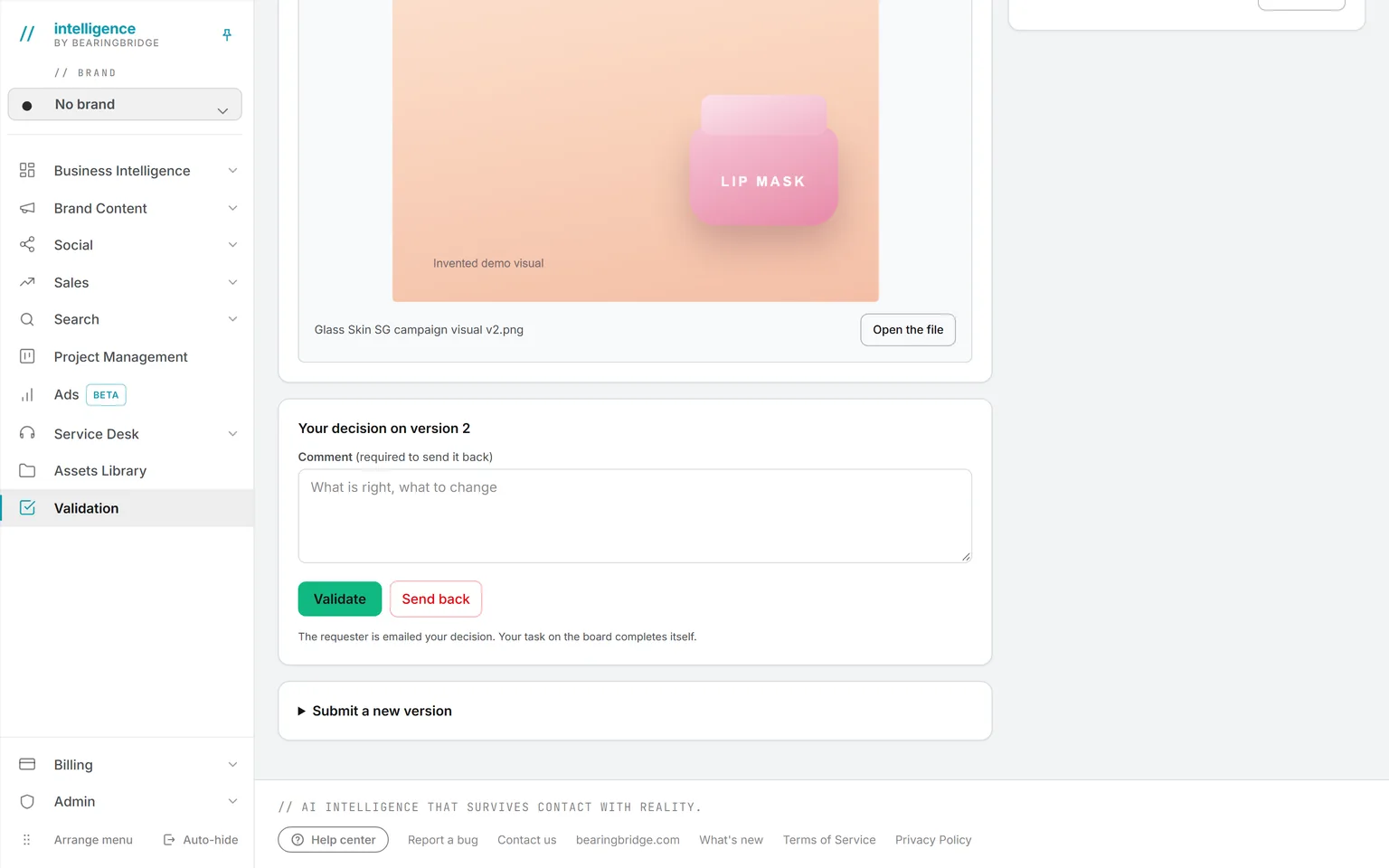
Every decision, on every version. The comment is required only to send one back.
Four things that never disappear.
None of this can be turned off:
Every version records who submitted it, the note, who decided, when, and the decision comment. The history is the point.
The thread holds comments, submissions, validations, rejections, and reassignments, in order.
A single colleague per asset, or an administrator in their place. Reassign, and the card moves with it.
Mail and the board card are best effort: neither can turn a submission into an error. Request, decision, and comment mails go out in the interface language of whoever acted, greet the recipient by name, and are logged for a super admin to resend.
The same data, one door over.
Nothing here is an integration. These run on the same account, the same brand, the same ledger, so a finding on one page becomes work on the next.

Not built yet, said first
- One validator per asset. No approval chains and no parallel sign-off.
- No due dates or escalation on a validation.
- Validators are colleagues in the same organization. No guest validators yet.
- Only posts, articles and copy pieces are locked while they wait. A file or an image sent for validation can still be changed in the library, so treat that overlap with care.
The catalog lists every agent as built, partial, or not built. Checked against the product on October 4, 2026.
Usage is paid from a prepaid wallet, with no seat fee. The rates are on the pricing page.
The first decision takes a minute. The trail lasts as long as the asset.
Validation is on for every organization. Send a post or a file, name a colleague, and the card is on their board before you’ve closed the dialog.
No subscription. No seat fee. No card needed to open an account.