
Modules / Search
Where you rank, and what the assistants say.
Buyers find you two ways now: a Google search, or a question put to an AI assistant. Search tracks both. On Google, it follows the rank of each keyword by market and language, and the keywords your competitors hold that you don’t. In the assistants, it shows how often you’re named and what the answer actually says, sources included.
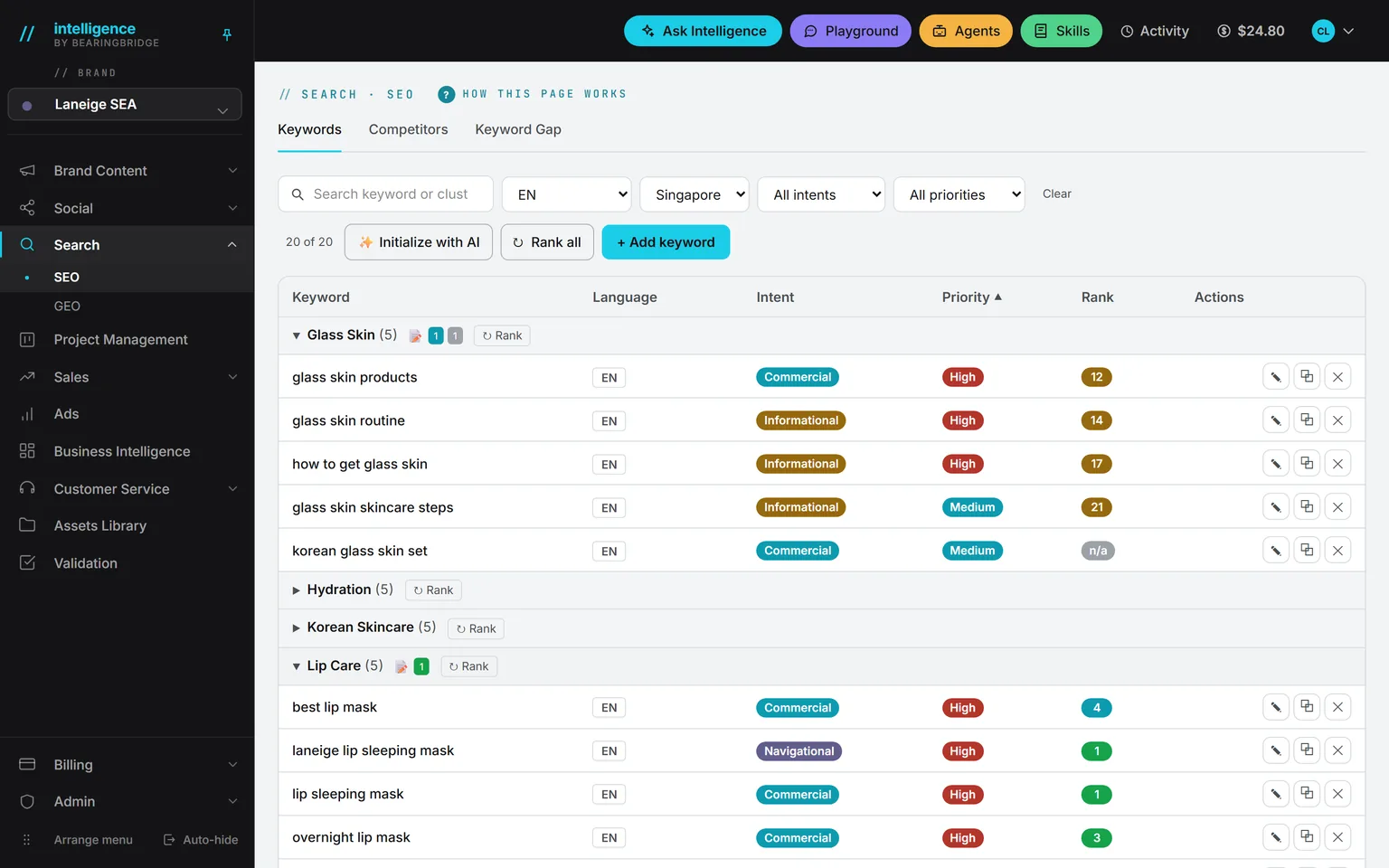
Demo workspace. Invented brand and figures.
The rank each keyword holds today, market by market.
Keywords. Each keyword sits in a group with its language, intent, and priority. The rank column shows where it stands today in the market you pick. Edits save for the whole team, and a full re-rank runs on the server, so you can close the tab.
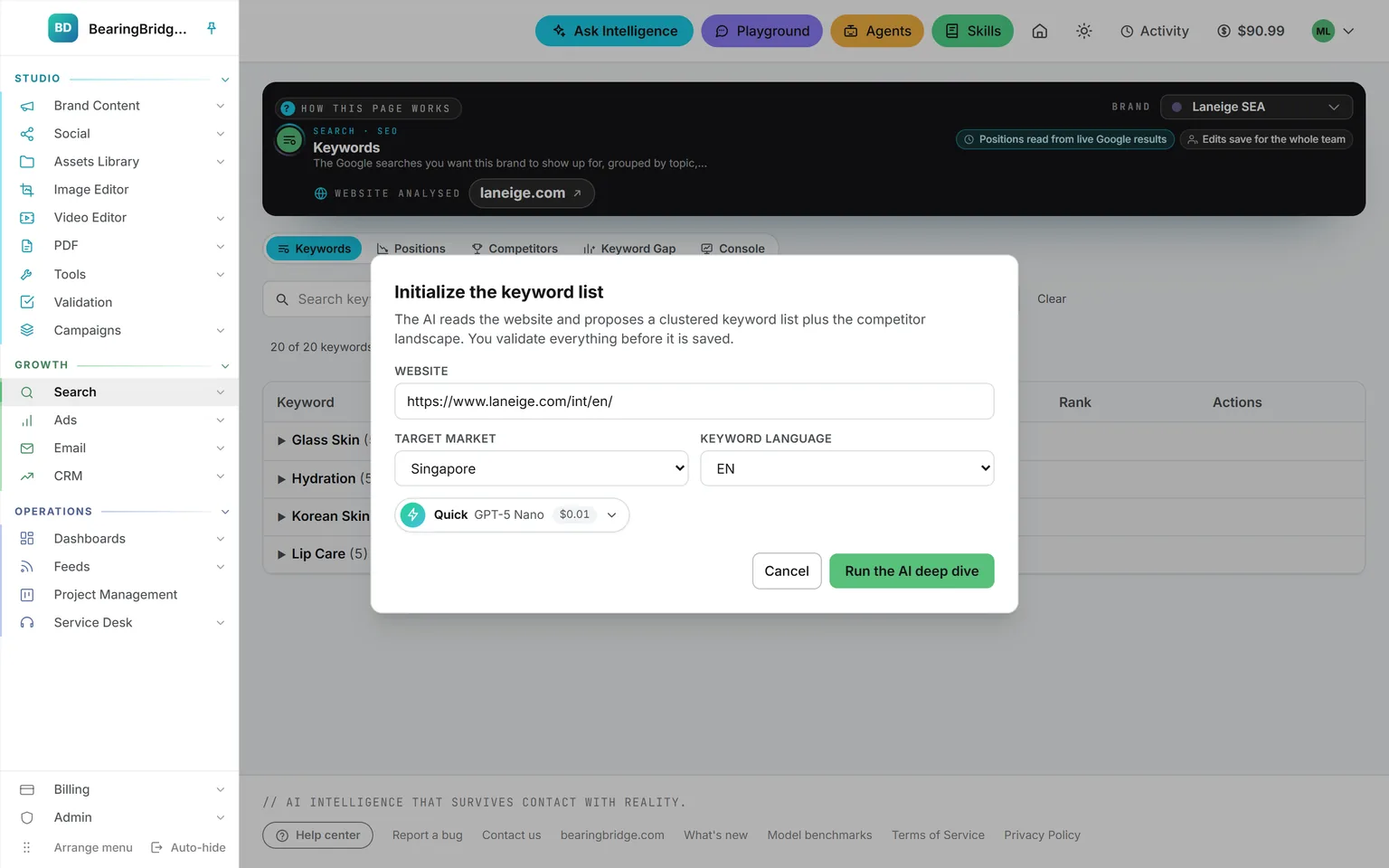
Set up with AI. Give it a website and pick a market and a language. The AI reads the site and proposes grouped keywords, plus the competitors it spotted. Nothing is saved until you validate it, and then the first ranking runs. You pick the model it runs on from the list your administrator offers.
Screens from the demo workspace, captured September 19, 2026.
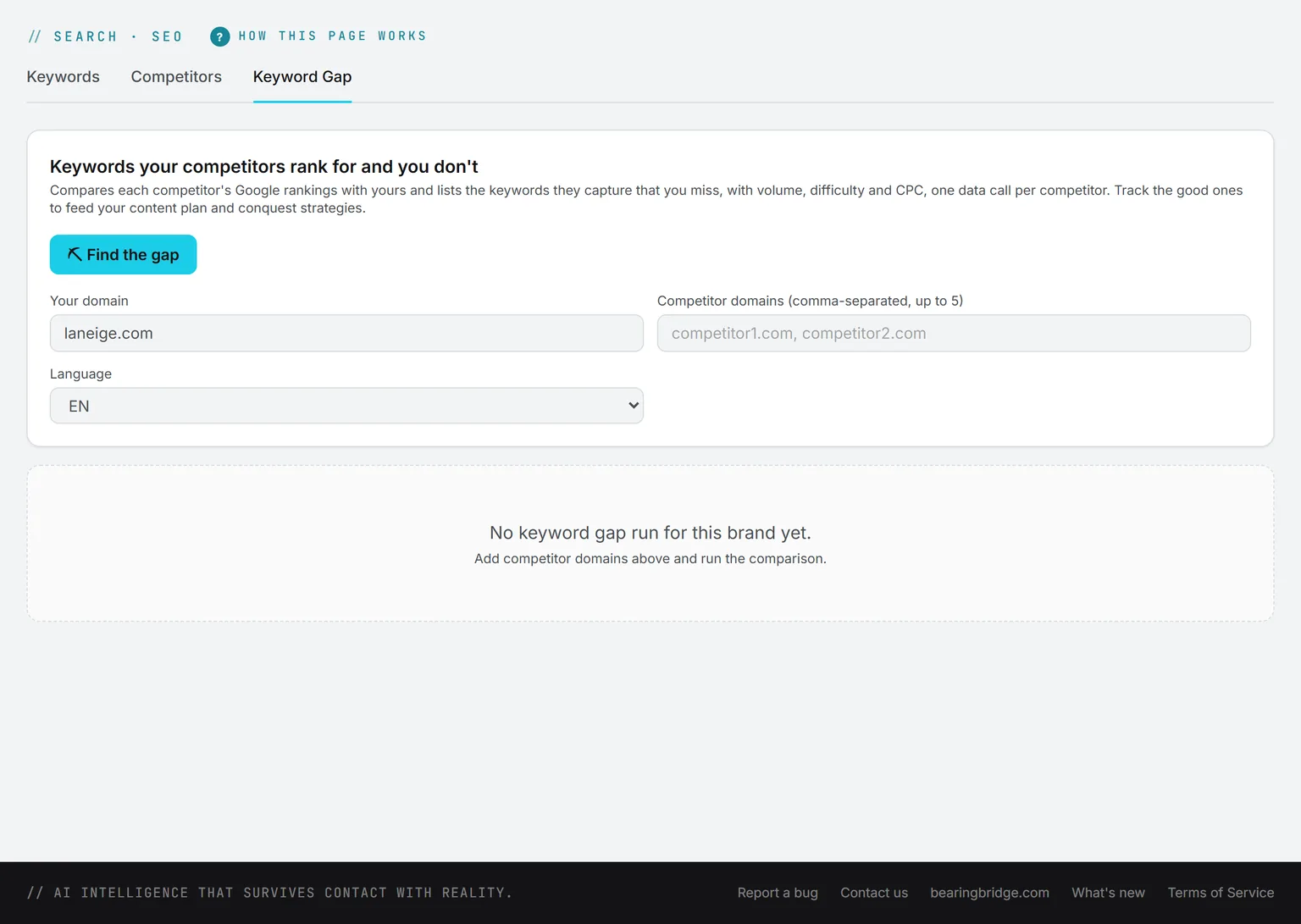
What they rank for, and you don’t.
Name up to five competitors. For each one, the product pulls the Google keywords they rank for where you don’t. The lists are merged without duplicates and sorted by volume. Each row shows volume, difficulty, cost per click, and which competitor ranks where.
Track the ones you want to go after. They join your keyword list and get ranked with everything else. The last gap run stays on the page for the brand.
What the AI assistants say about you.
GEO stands for generative engine optimization: being the brand an AI assistant names. An assistant rarely lists ten links. It names two or three brands and cites a handful of sources. GEO has five tabs built around that answer. Every run is paid for and prints a receipt. It then stays on the page as a dated result you can reopen or delete.
AI Visibility
Share of voice
How often Google’s AI Overviews or ChatGPT mention your domain next to up to nine competitors. Below it, what ChatGPT search or Gemini shows for a keyword, and whether your site is cited.
Ask the AIs
The actual answers
One buyer question sent to ChatGPT, Claude, Gemini, and Perplexity. Each answer comes back with its sources and a yes or no on your name.
AI Volume
Demand
How often your tracked keywords come up in AI tools, next to their Google volume. Run it on every keyword, one group, or a hand-picked few.
Who AI Trusts
The cited sources
The 15 domains and 15 brands the assistants cite most on a topic.
Trends
Month by month
Mentions of any domain over time, with what was gained and lost each month.
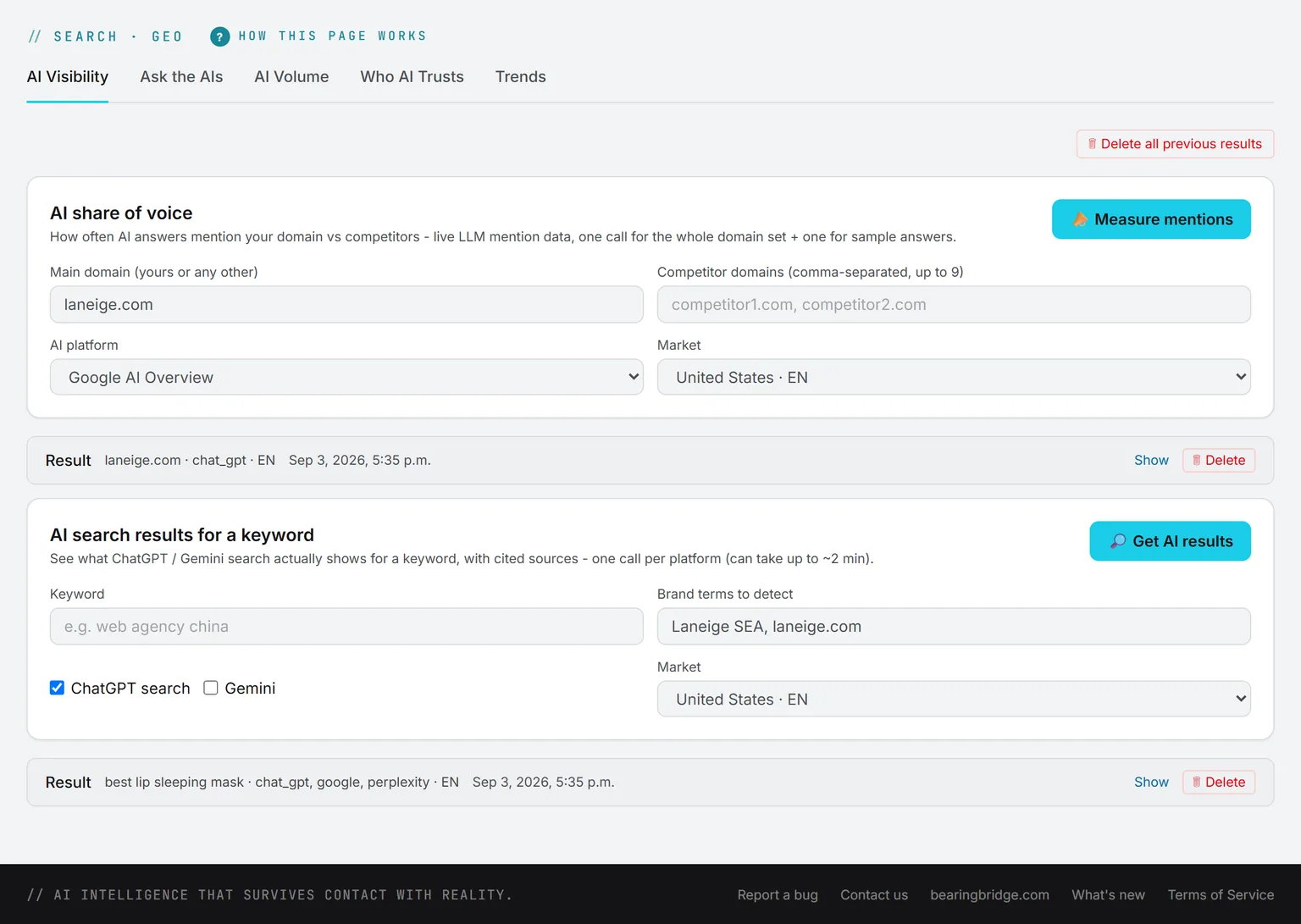
Share of voice on ChatGPT, next to four competitors, with the answers that cite Laneige underneath.
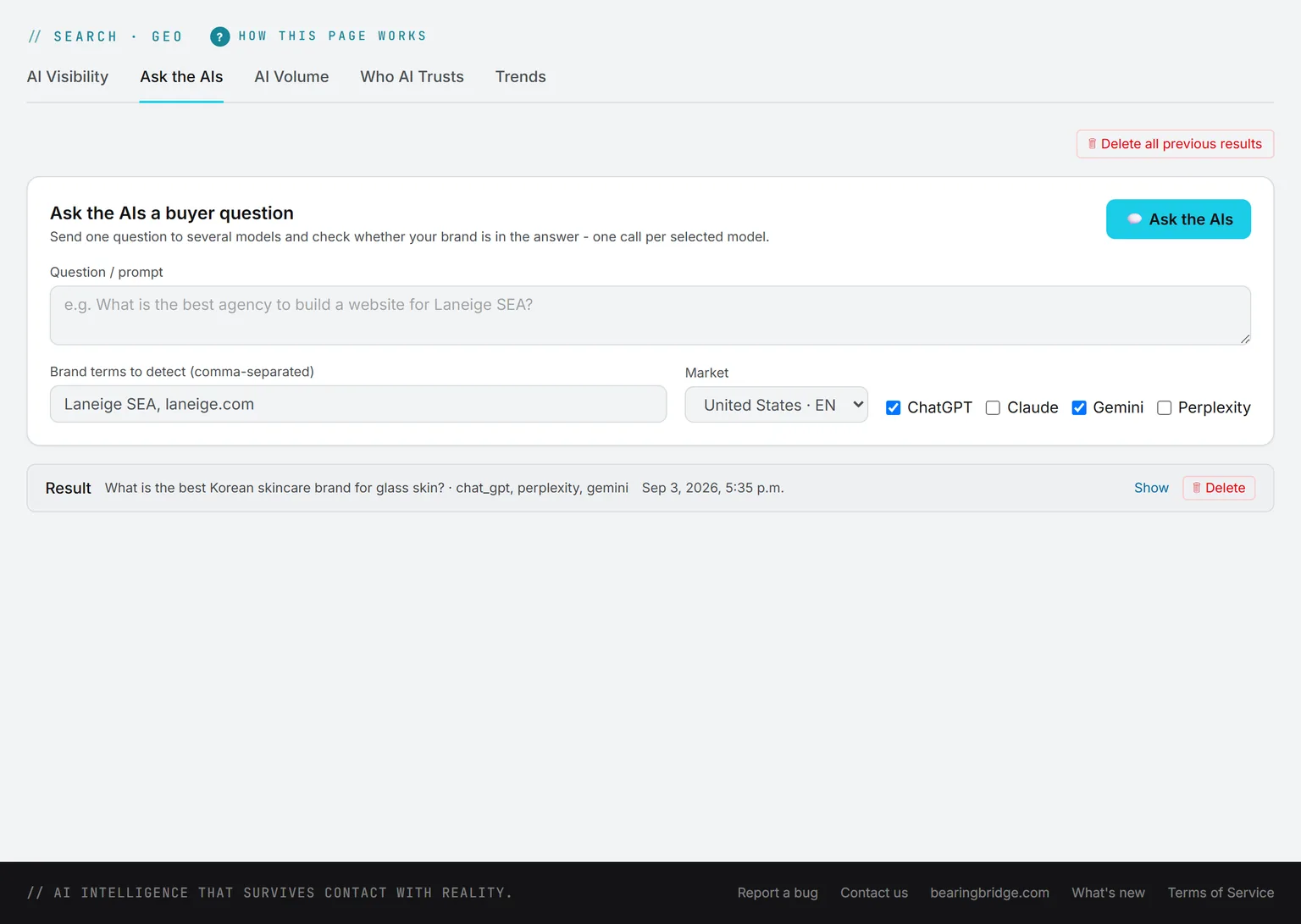
The same buyer question put to three of the four assistants. Only Perplexity named Laneige.
Who the assistants trust, and which way it’s moving.
Two of those tabs tend to decide where the next month of work goes, so here they are up close.
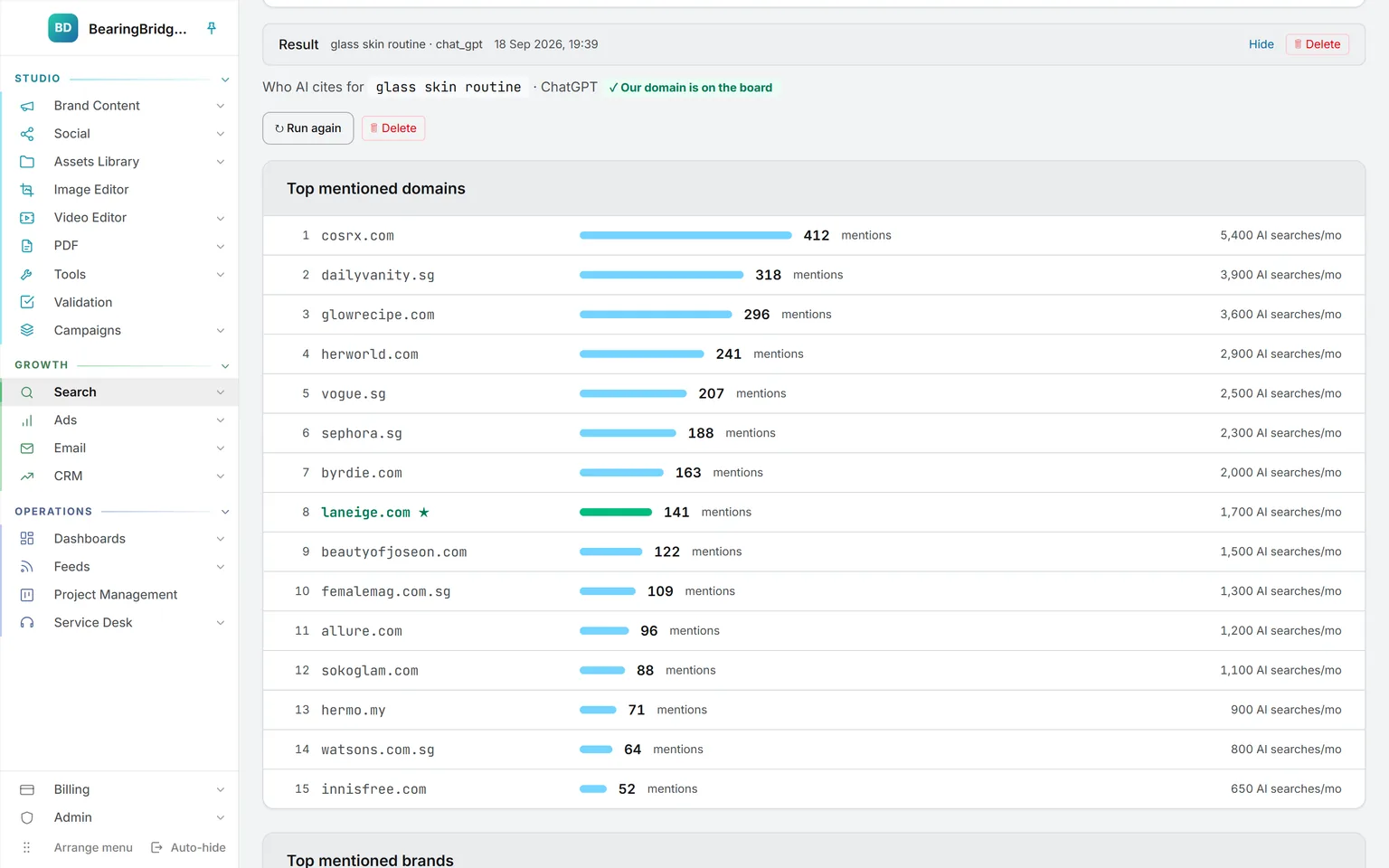
Type a topic into Who AI Trusts and you get two leaderboards: the domains and the brands the assistants mention most, on Google’s AI Overviews or ChatGPT. If a beauty site keeps turning up in those answers and has never written about you, it’s probably worth a pitch.
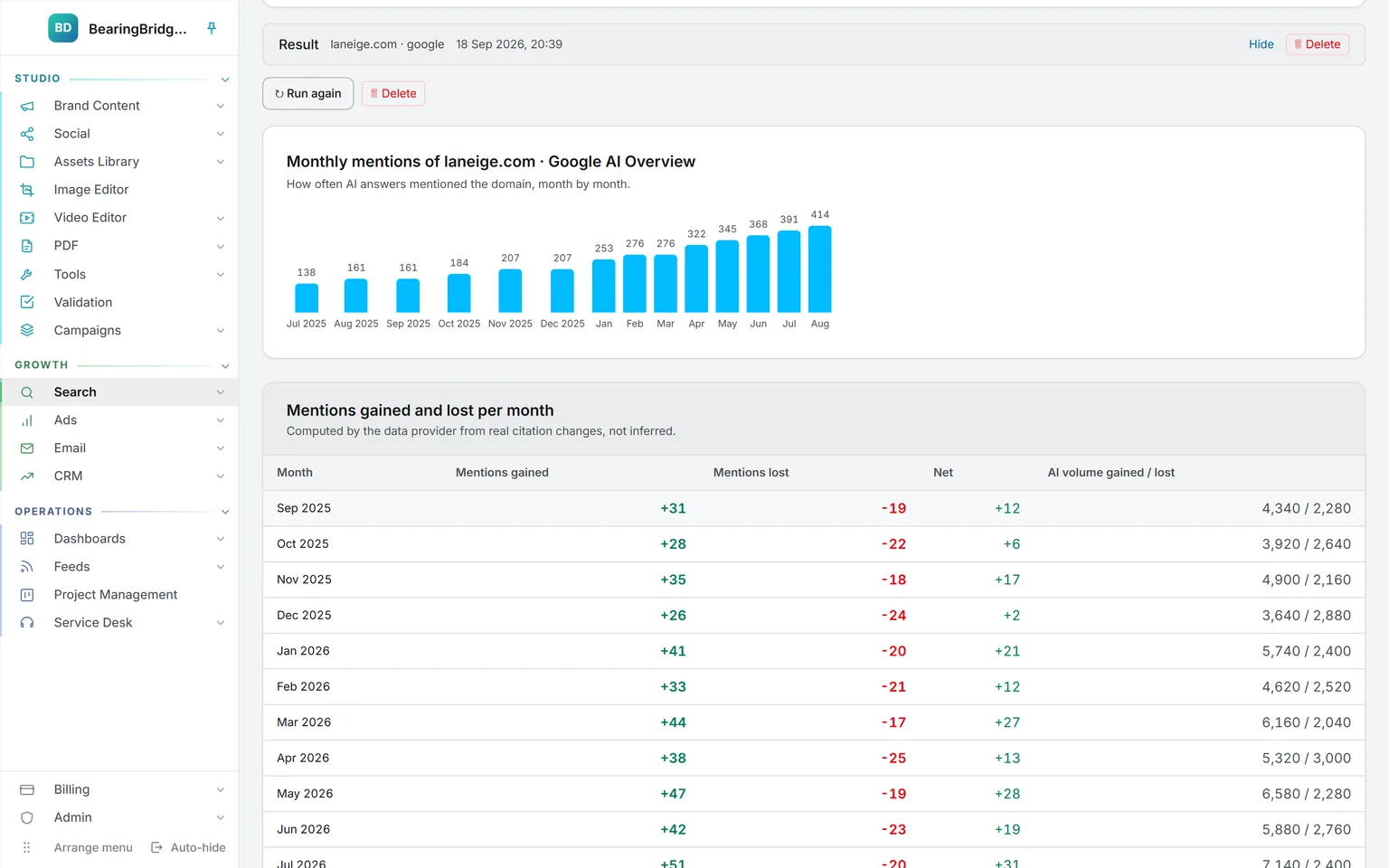
Trends counts, month by month, how often the assistants mentioned a domain over the last 14 months or so, and how many mentions it gained and lost. Put a competitor’s domain in and you get their line too.
A written plan for winning back the answer.
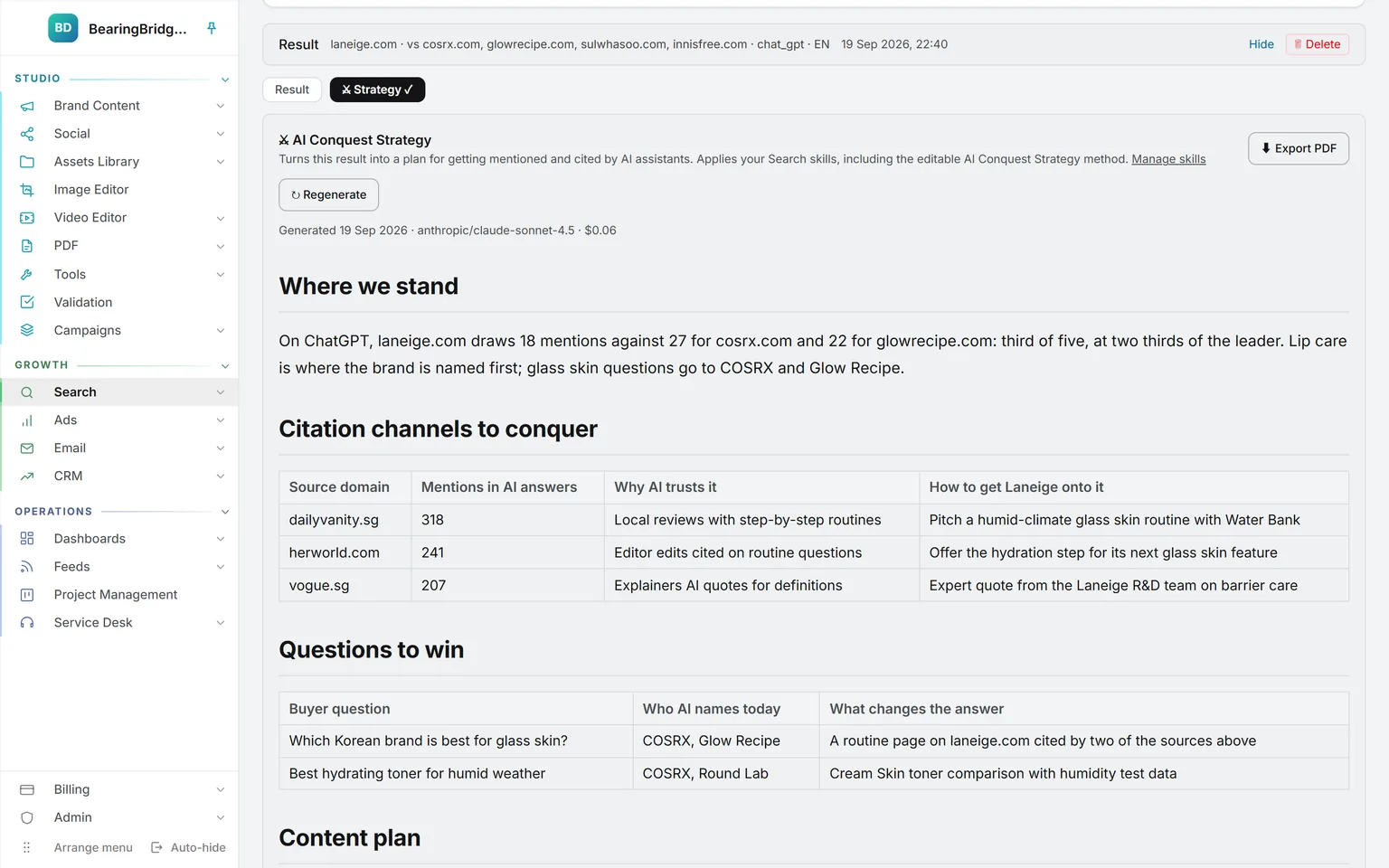
Open any AI Visibility result and ask for its AI Conquest Strategy. It reads that result and your other GEO data. Then it writes where you stand, the citation channels to win, the buyer questions to take back, a content plan, and an action plan with targets.
The method is a skill your organization can read and edit. The plan is saved with the result it came from, shows the model and what it cost, and exports to PDF.
What a run costs, and who can start one.
There’s no Search subscription on top: you pay for the runs. Money goes out two ways, on live search data and on the AI that writes the wizard’s list and the strategy. You see what each one cost on screen. The rates themselves are on the pricing page.
Runs draw on prepaid credits. An administrator decides how much each person may take from the shared credits per day, and the organization can set a monthly cap. Rights are set per person too, so someone can read the rankings without being able to start a paid run. The AI wizard needs a brand manager or an administrator.
Each rank pass, gap, and GEO run shows what it cost when it finishes, call by call. The AI strategy prints its model and its price on the plan.
Rank checks, search volumes, and AI visibility data are priced from what each call really cost, not from a flat estimate per keyword.
The keyword wizard lists the models your administrator offers. It remembers your pick next time, and the receipt says what the run cost.
The same data, one door over.
Nothing here is an integration. These run on the same account, the same brand, the same ledger, so a finding on one page becomes work on the next.
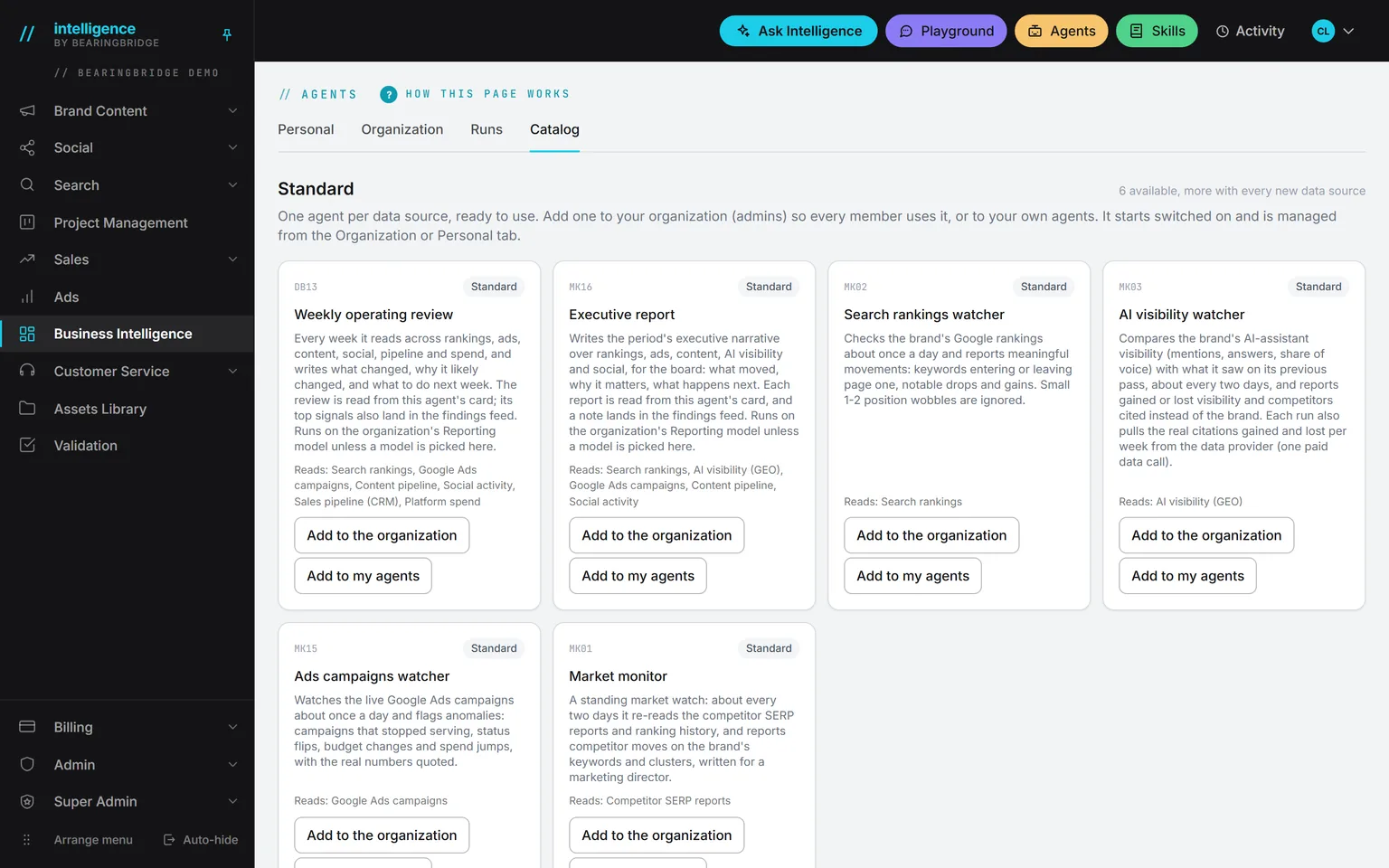
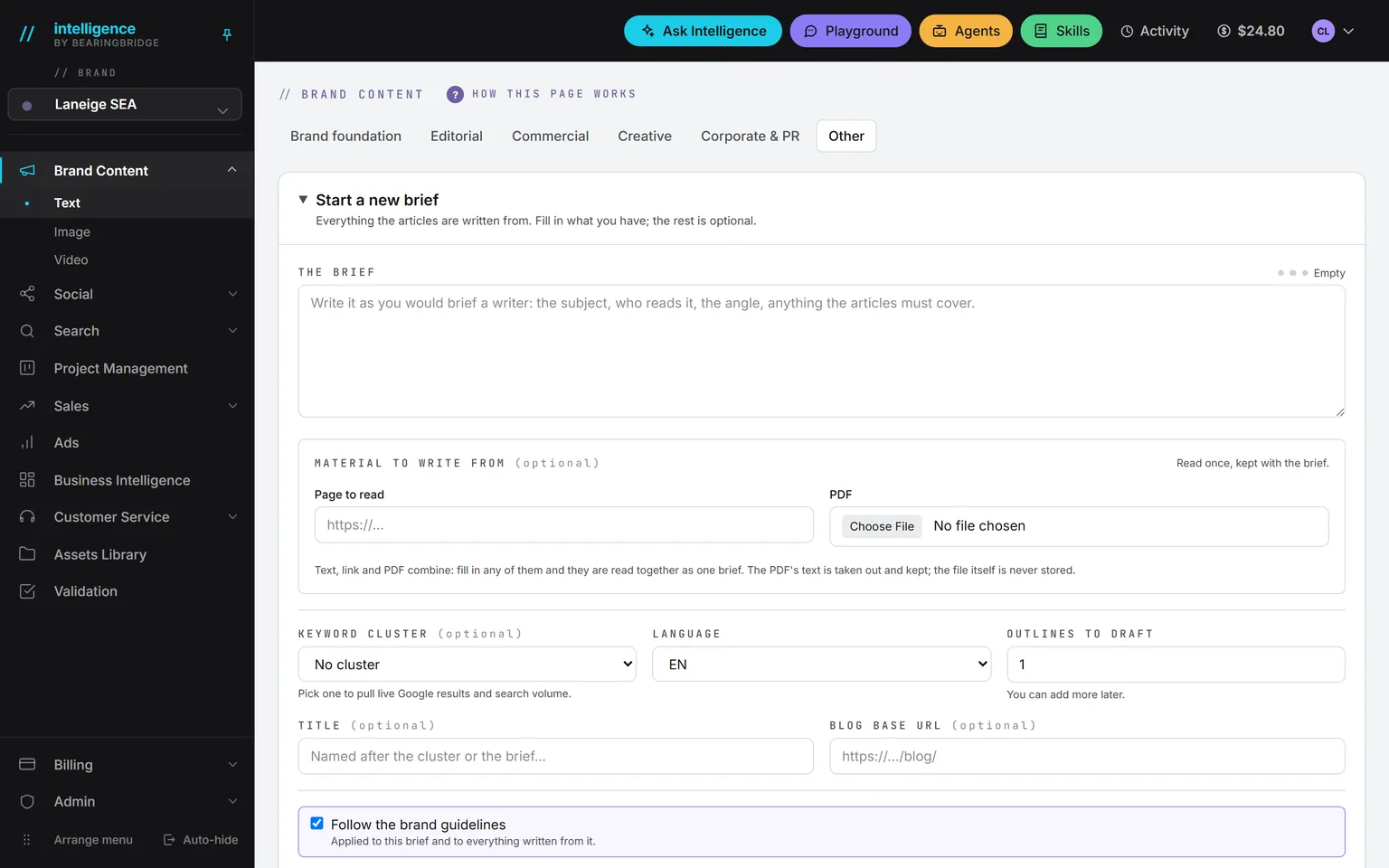 AgentsThe rankings watcher and the AI visibility watcher read these results and report what moved.
 Business IntelligenceThe Visibility dashboard: keywords tracked, ranked, on page one, and AI share of voice.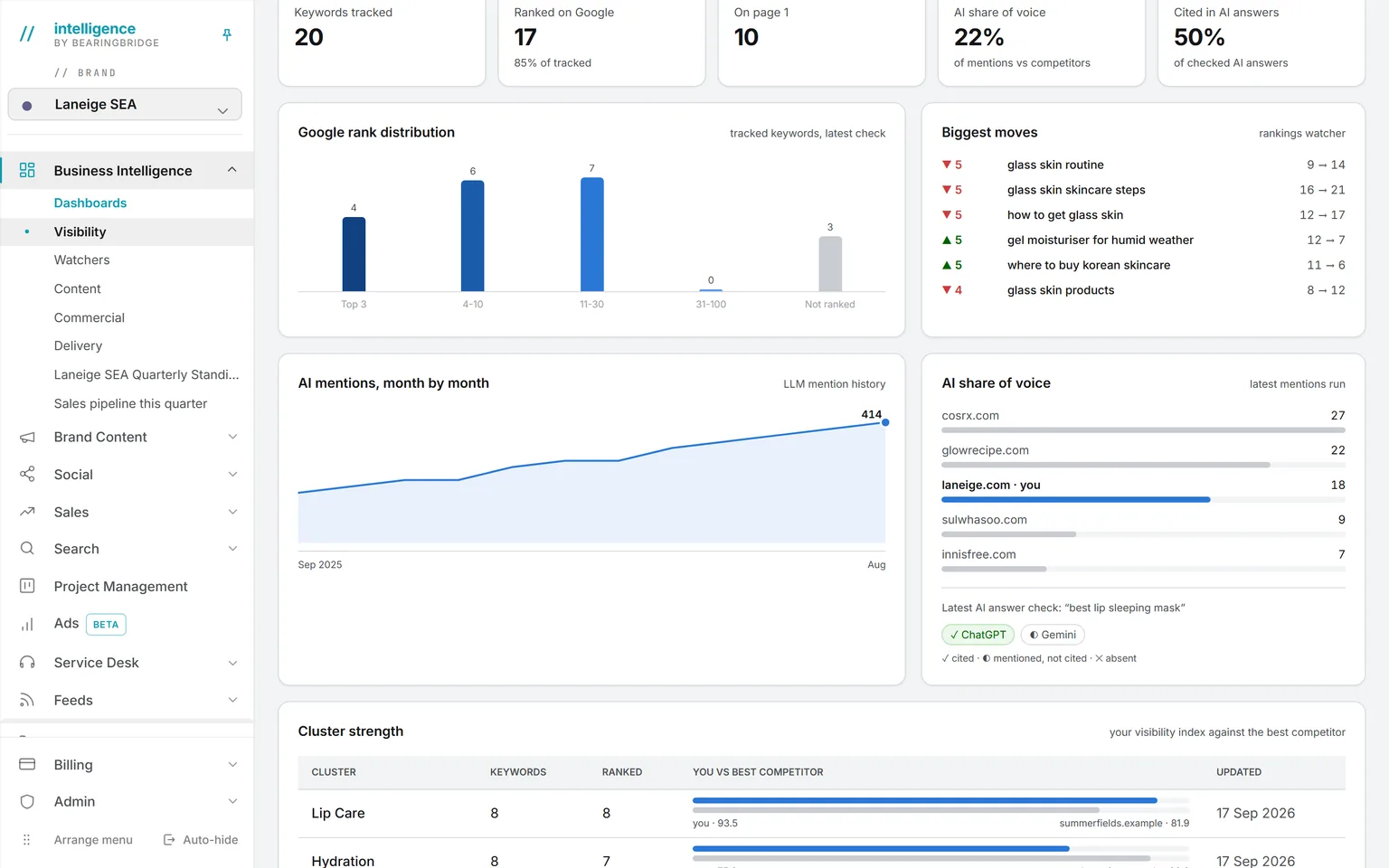
Not built yet, said first
- Ranks come from Google only, and each keyword keeps its latest check per market. There’s no rank history chart per keyword yet.
- Competitor reports per keyword group aren’t open yet. The keyword gap is the competitor view today.
- Share of voice, trusted sources, and trends cover Google’s AI Overviews and ChatGPT. Claude and Perplexity are reached through Ask the AIs only.
- GEO runs in the brand’s main market, in English or French.
- GEO measures the assistants through a data provider. It doesn’t connect to your own ChatGPT or Gemini account.
- There’s no price quote before a data run. The cost prints on the receipt when the run finishes.
The catalog lists every agent as built, partial, or not built. Checked against the product on October 4, 2026.
Usage is paid from a prepaid wallet, with no seat fee. The rates are on the pricing page.
Load 20 keywords. Know where you stand by tonight.
Switch on Search, pick your markets and languages, and let the wizard propose the first groups. Every rank pass and every GEO run prints its cost on its receipt.
No subscription. No seat fee. No card needed to open an account.