
AI Assistance / Playground
Every frontier model behind one login, with the price under every answer.
The Playground is a plain chat with the models your administrator allows, and it never reads your data: the model sees this conversation, the files you attach, your instructions, and, when you switch it on, the web. Compare three at once, get documents and images back, and read the cost under each reply.
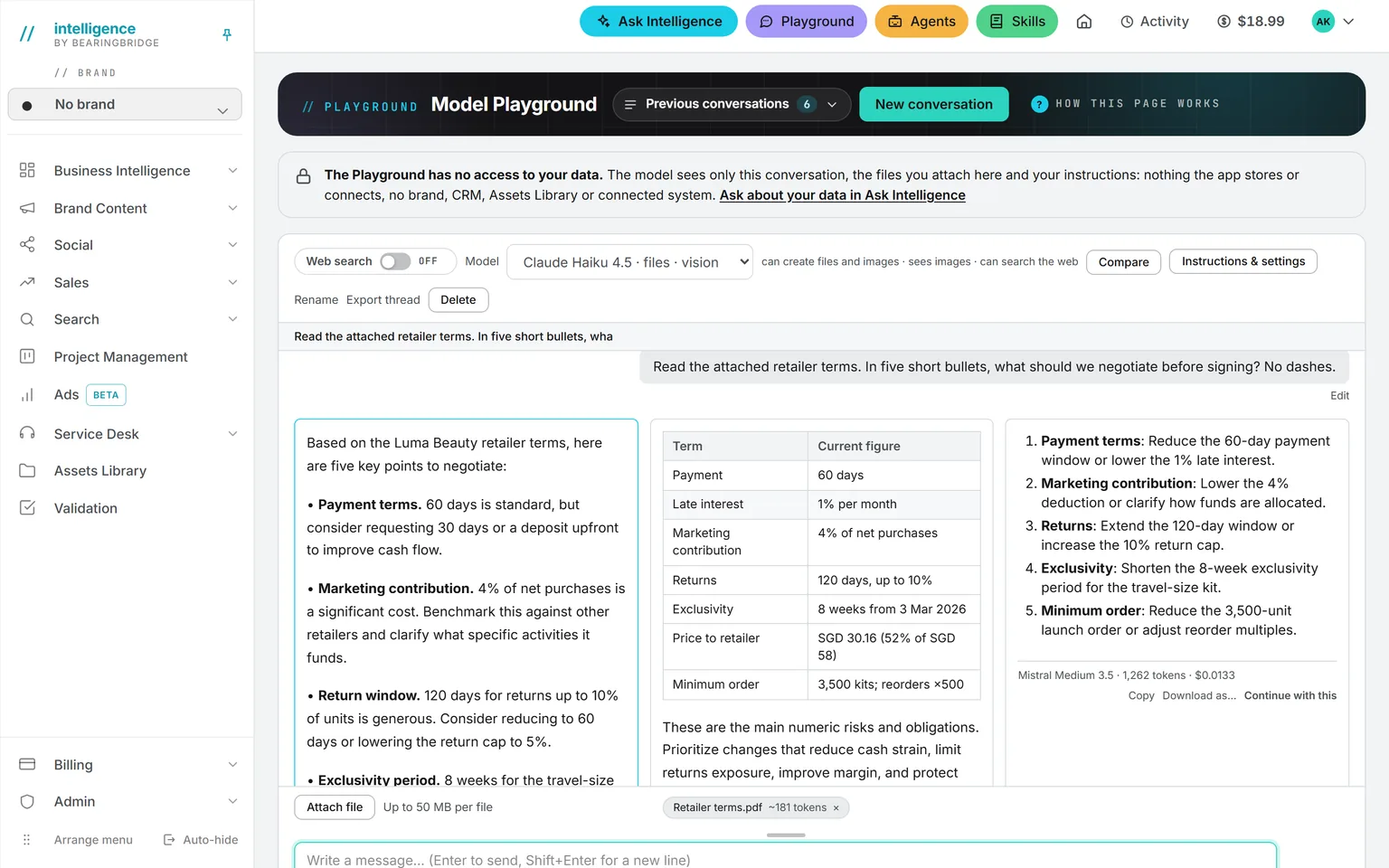
Demo workspace. Invented brand and figures.
Same question, three models, three prices.
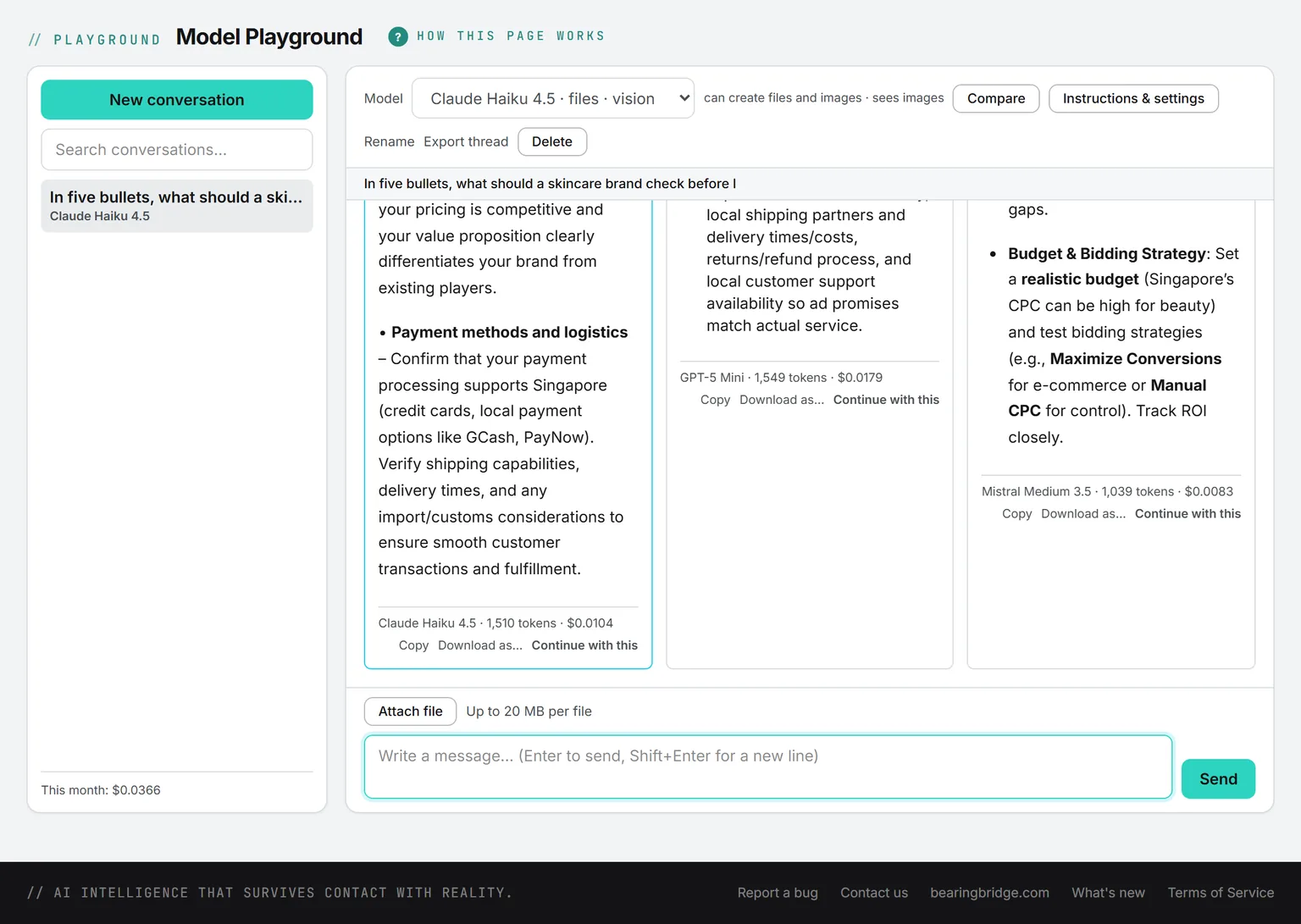
Compare. Tick up to three models, ask one question, and the button changes to say how many will answer. Keep the one you like with Continue with this, and the thread carries on from there.
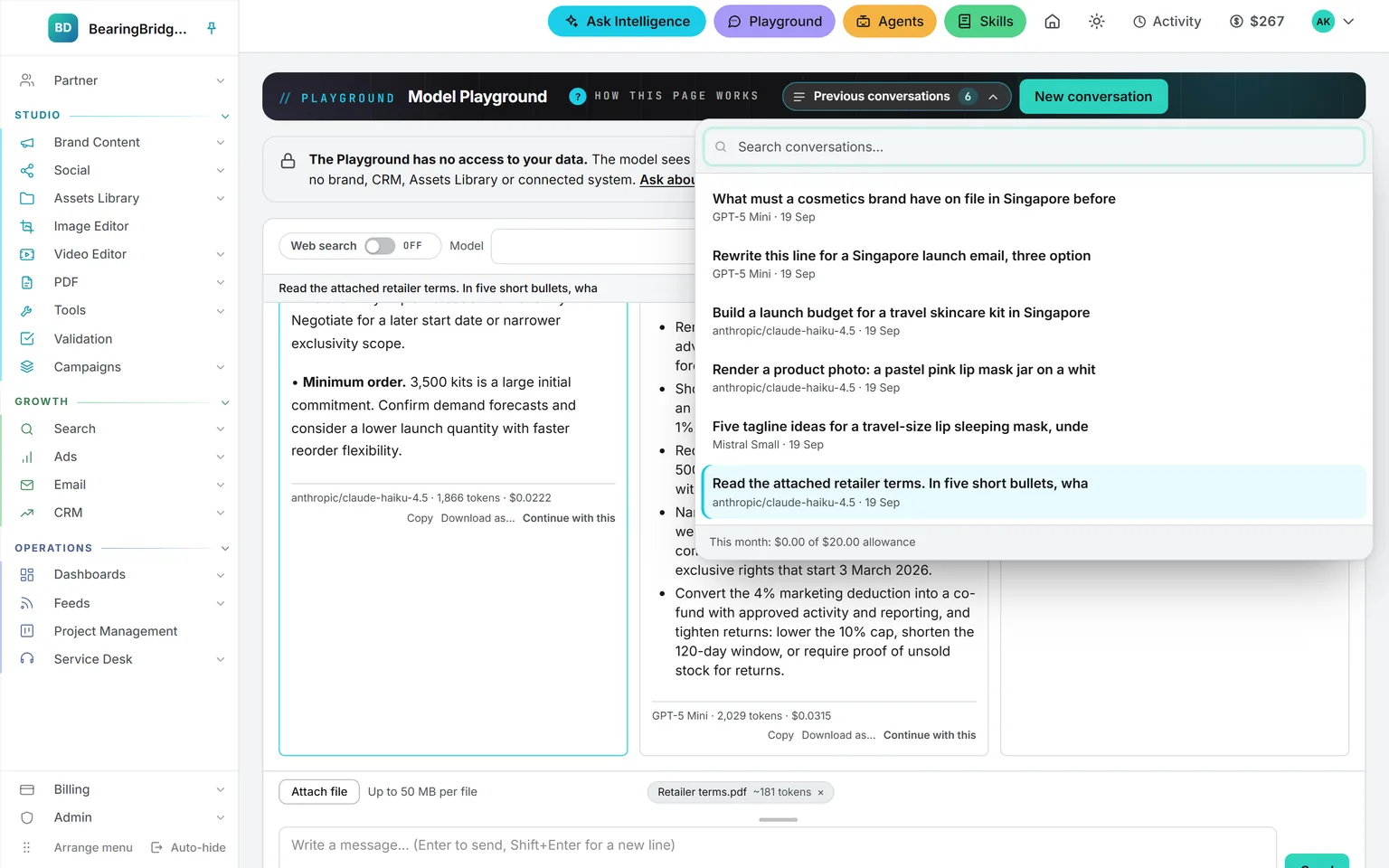
Conversations. Search, open, rename or delete a past conversation. The foot of the list keeps a running total against the monthly allowance your administrator set.
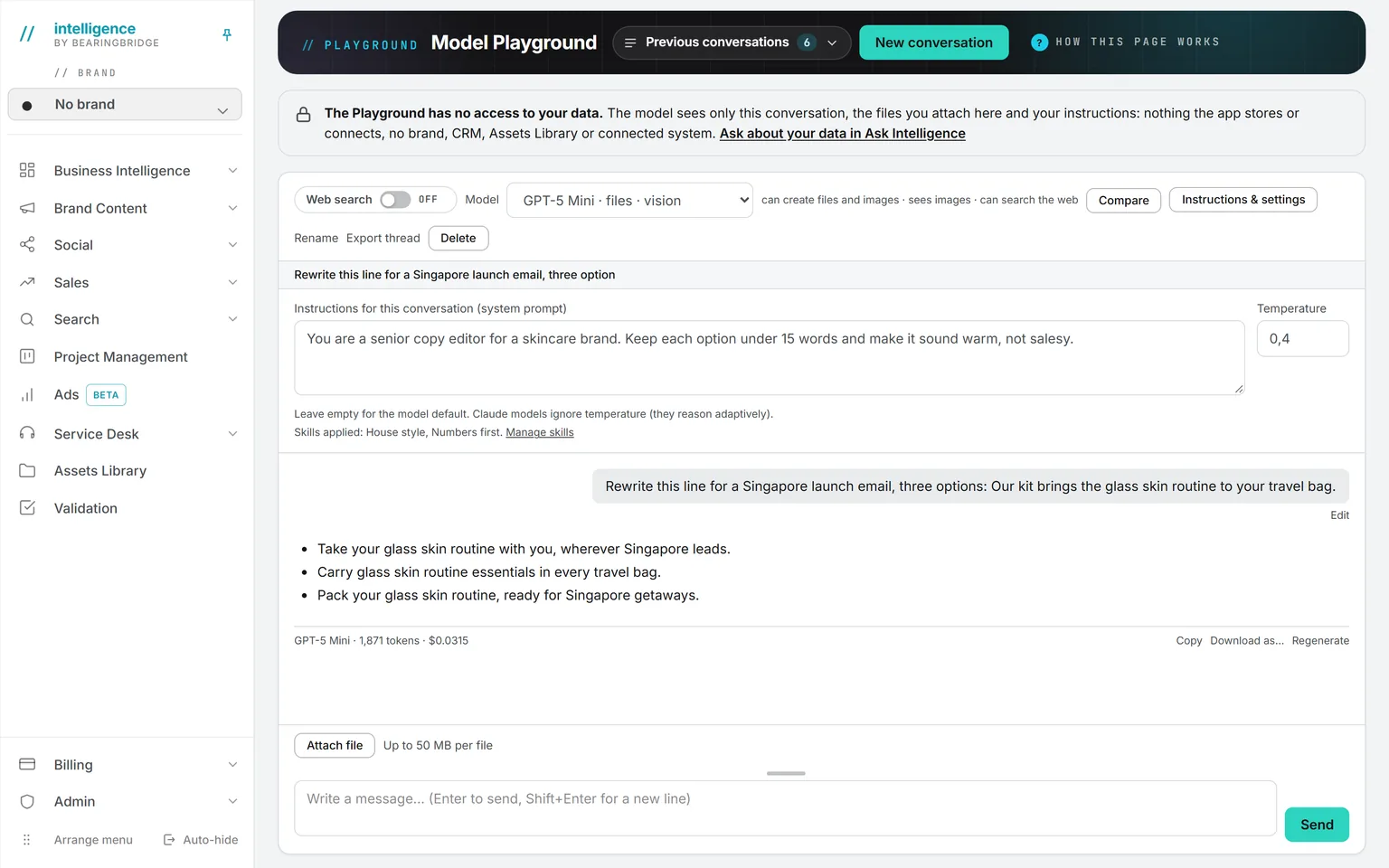
Instructions. Set a system prompt and a temperature for this conversation alone, or let your administrator lock both for everyone. Skills you or your organization wrote apply automatically, no picker needed.
Search the web, only when the question needs it.
Claude, GPT, and the two search-capable Grok models can run their own provider’s search, read the pages they pick, and list the sites under the answer. Every other model grays the switch out.
A conversation starts with it off, and the choice stays with that conversation. Your administrator can turn web search off for the whole organization. Each search is charged and joins the same price line as the tokens, and counts against the monthly allowance.
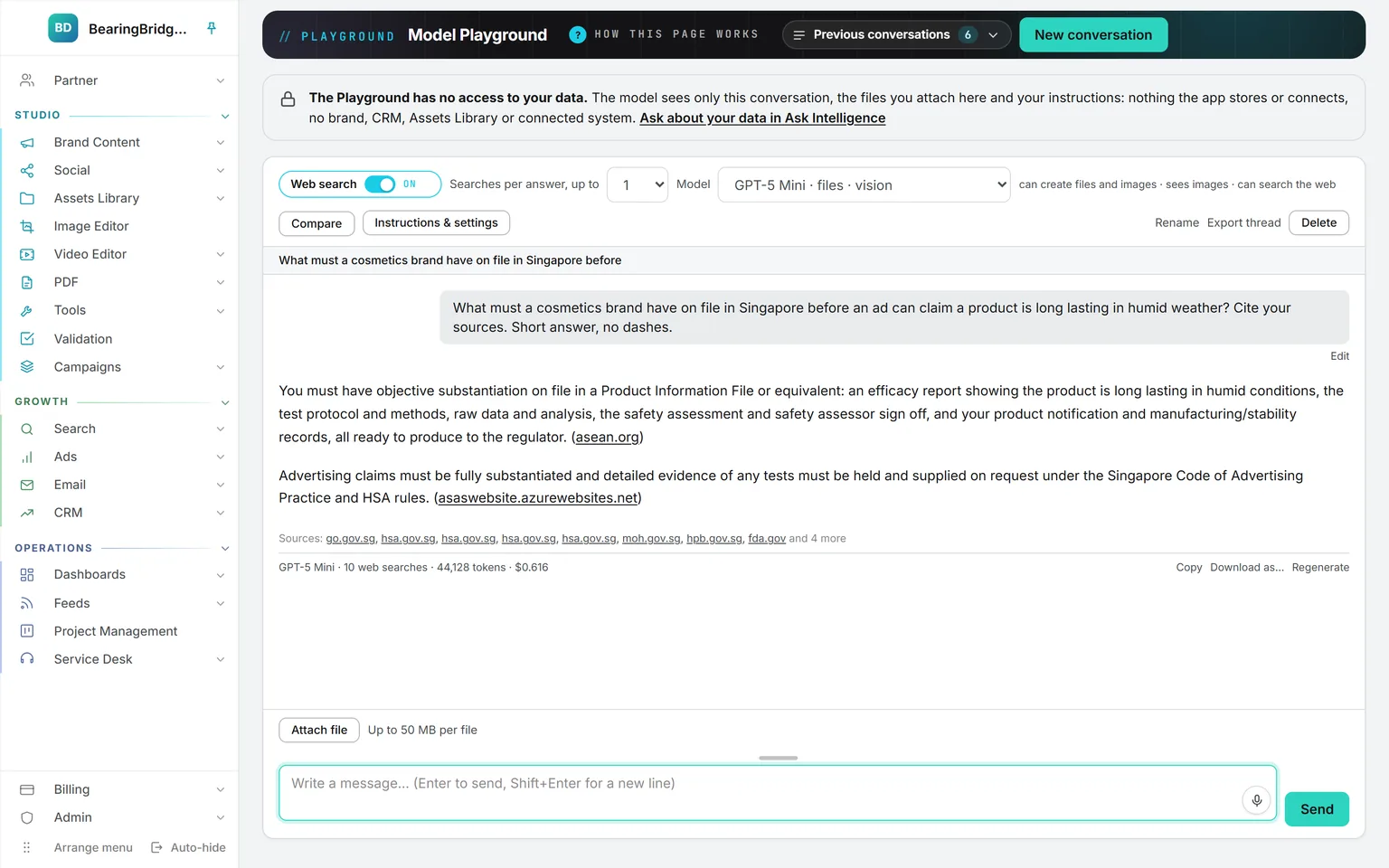
Documents in, documents and images out.
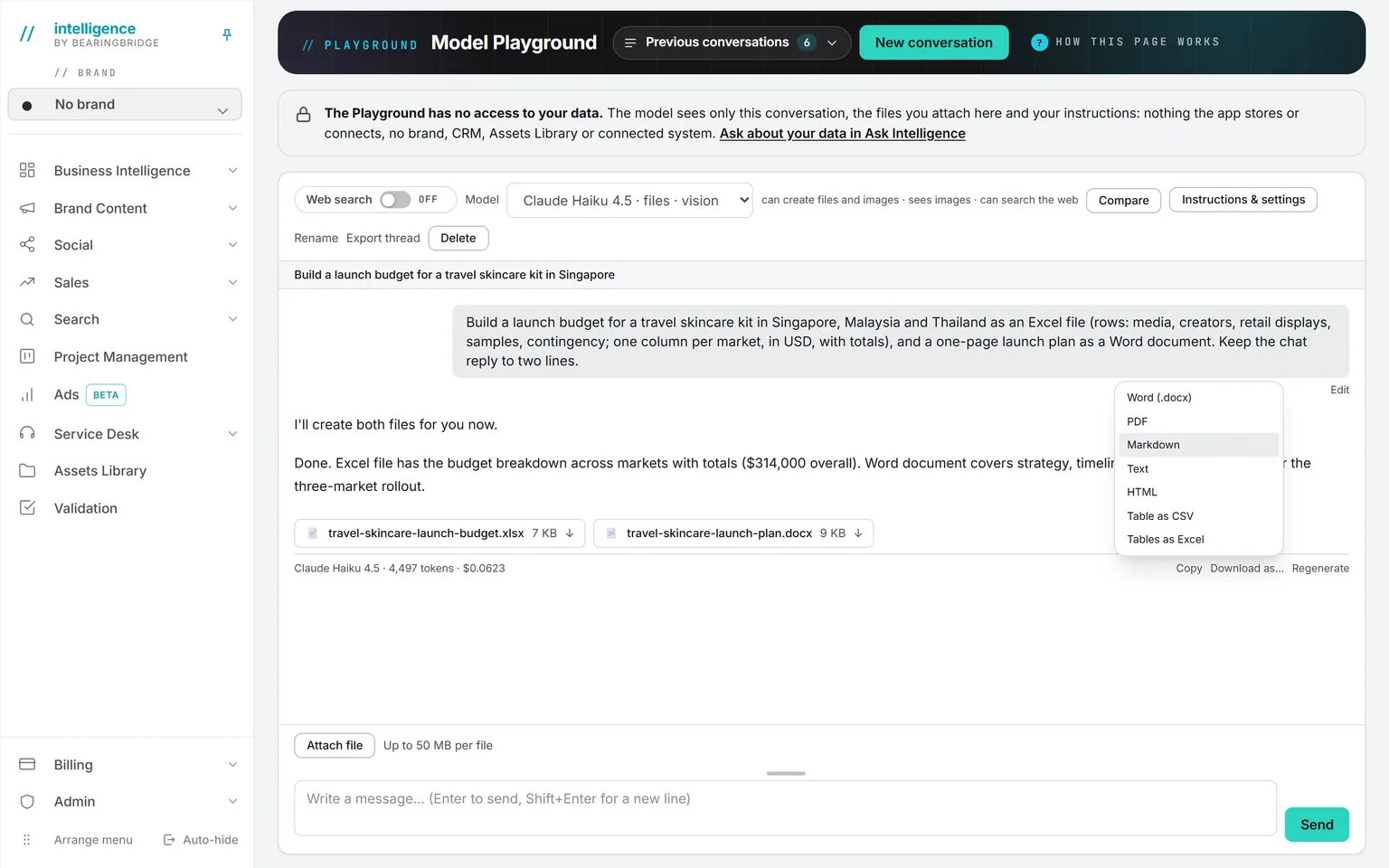
Drop a contract, a spreadsheet, a deck. The text is extracted and handed to the model with your question. Ask for a budget as an Excel file or a plan as a Word document, and the model creates the file during its answer. Ask for a product photo instead, and 31 of the 33 models can render one the same way.
Uploads go straight to storage, so a large file never holds up the chat. Files stay in the conversation until you delete it.
In
What you can attach
PDF, Word, Excel, text, Markdown, CSV, JSON, HTML, code and images. Up to 50 MB per file and 20 files in one conversation. Documents are read as text; images go to models that see them.
Out
What the model can create
Word, Excel, CSV, PDF, Markdown, text, JSON, HTML, PowerPoint and code files, plus a rendered image on the models that draw one, listed under the answer to download.
Export
Any answer, seven ways
Word, PDF, Markdown, text, HTML, a table as CSV, tables as Excel, or the whole thread as one Markdown file.
The administrator holds the keys.
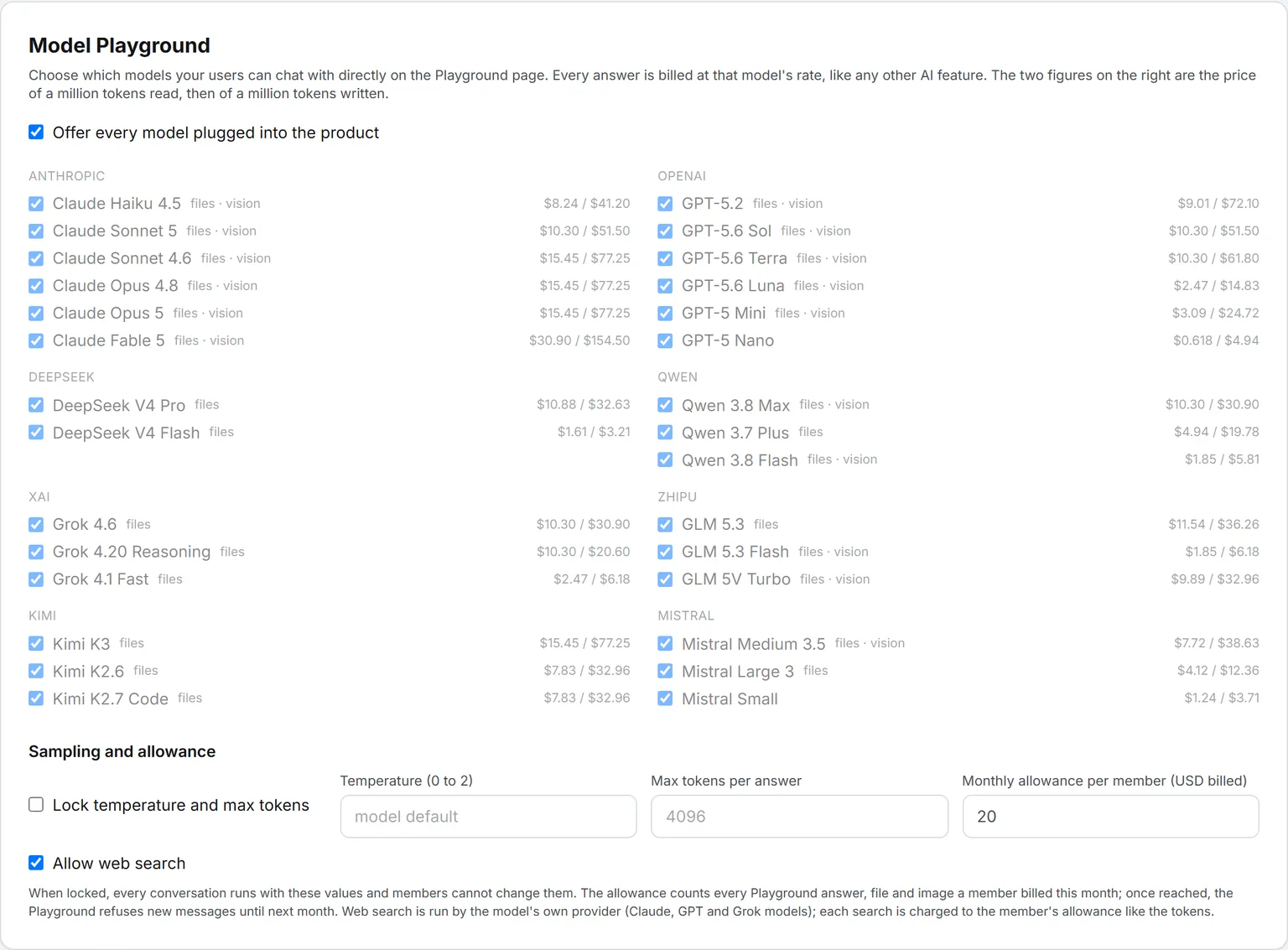
These settings live on the AI Models page, not in a config file only engineering can reach, so anyone with the role can see them and change them.
Leave it open, restrict it to a shortlist, or switch the Playground off for the whole organization.
Fix the temperature and the maximum answer length for everyone, so a member can’t change them.
A ceiling in dollars, counted from the first of the month. Reach it, and new messages wait until next month.
On by default for the organization. Turn it off, and every conversation loses the switch, whatever the model.
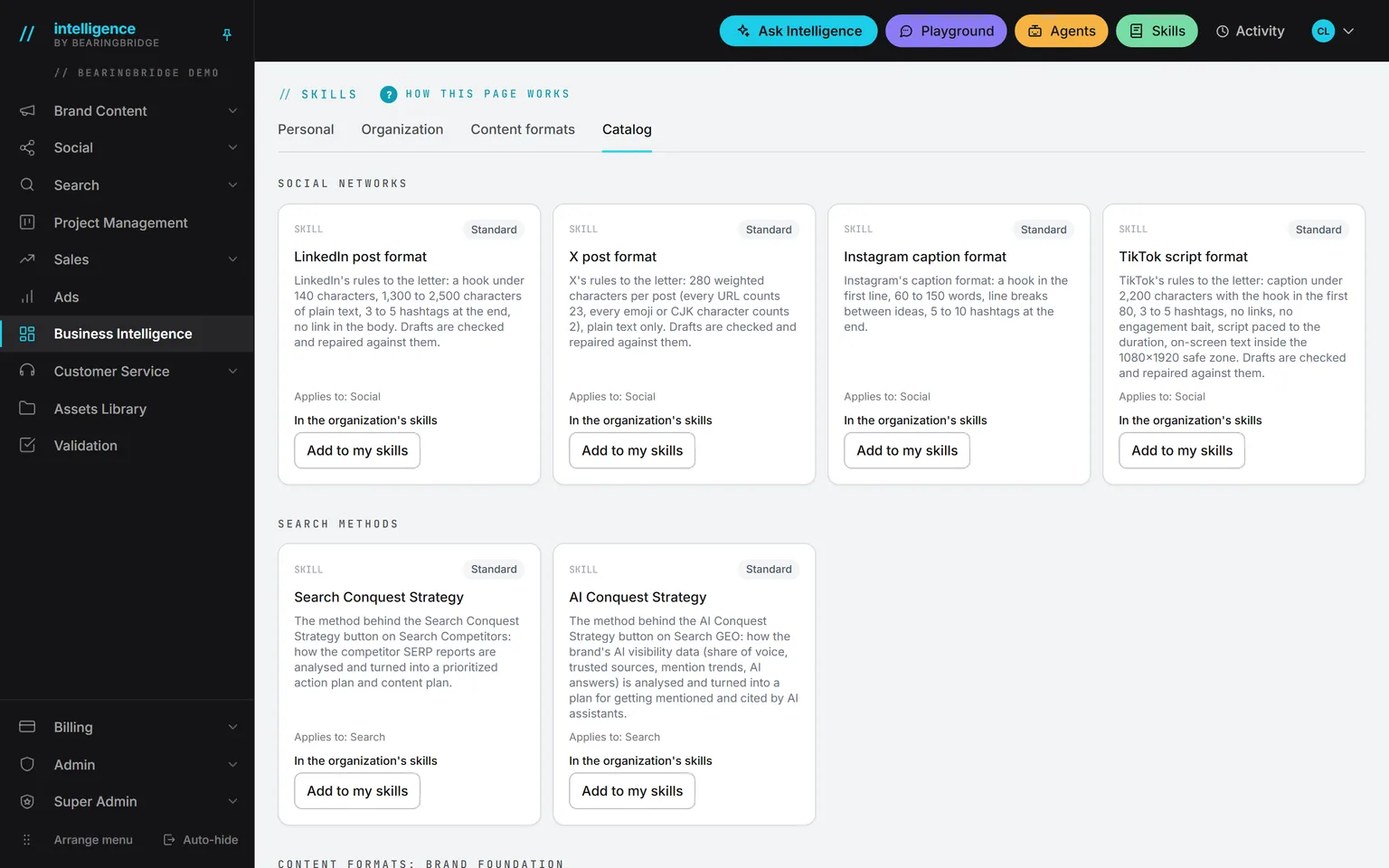
Skills you or your organization wrote apply automatically, on top of whatever system prompt the conversation carries.
No seat. Tokens, from the same wallet.
There’s no Playground subscription. Each answer is metered in tokens, billed at that model’s own rate, and paid from the same prepaid wallet as the rest of the product. The price is printed under the answer, and this month’s Playground total sits at the foot of Previous conversations.
Three ceilings apply on their own: your daily credit, the organization’s monthly cap, and the Playground allowance your administrator set for you.
Under every answer
Tokens in and out, web searches when you used any, and the billed dollars.
In Previous conversations
This month’s Playground spend, and your allowance, updated after every answer.
In the ledger
Who, when, which model, and the exact cost.
The same data, one door over.
Nothing here is an integration. These run on the same account, the same brand, the same ledger, so a finding on one page becomes work on the next.
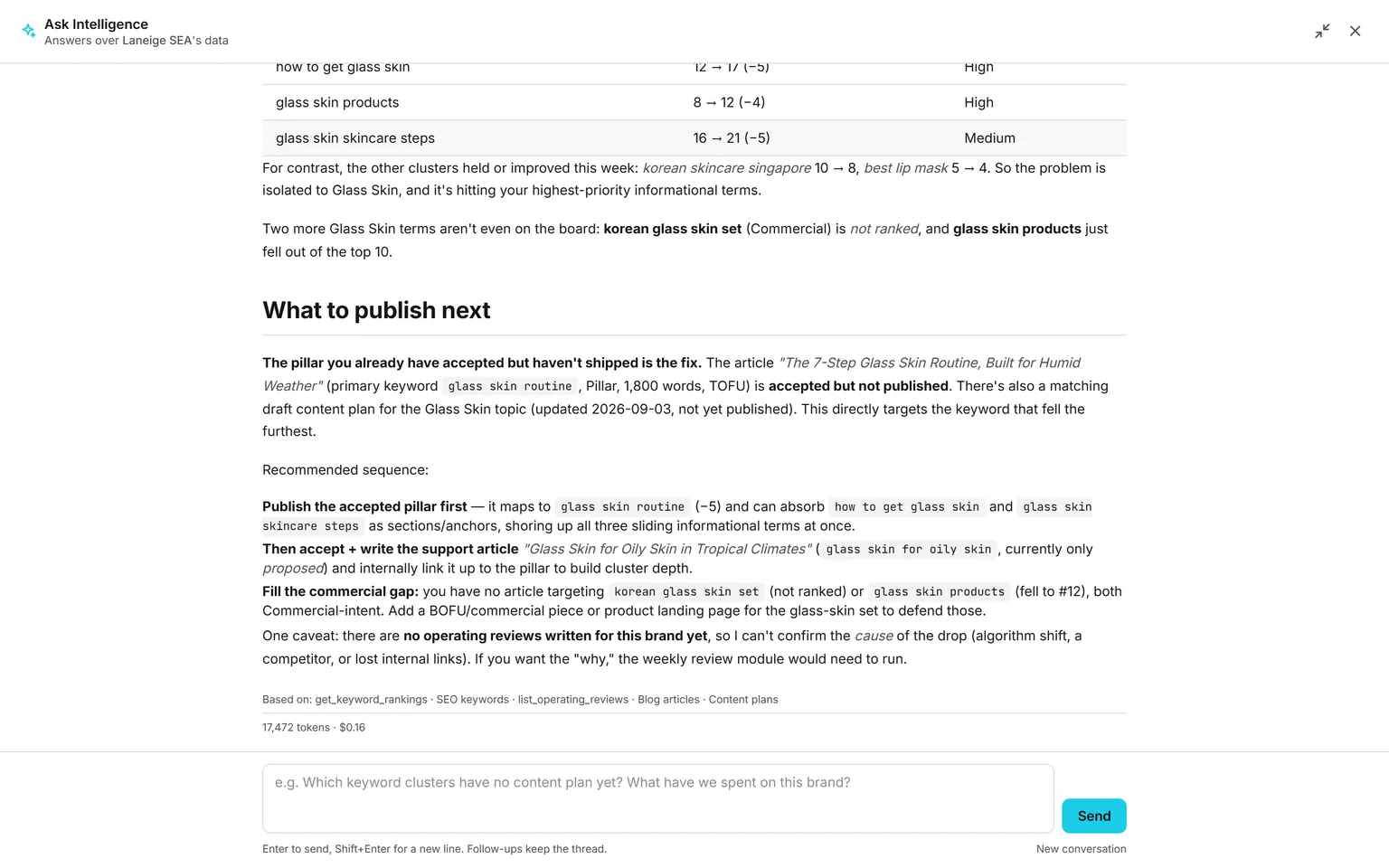 SkillsHouse style and methods you wrote apply here automatically, without a picker.
 Assets LibraryDownload what the model creates here and file it yourself. The Playground never saves to the library for you.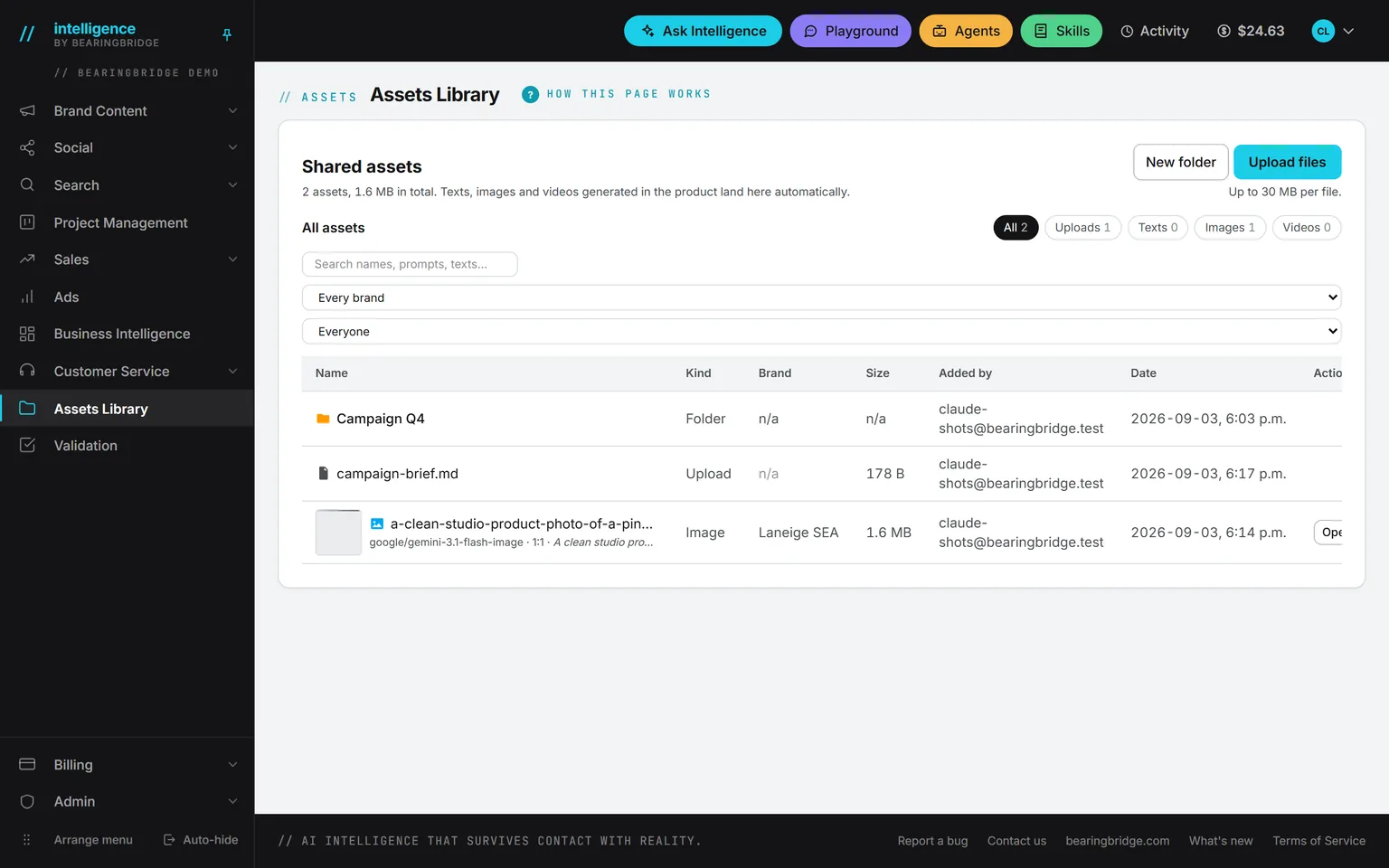
Not built yet, said first
- Compare keeps the first answer as the thread until you pick Continue with this on another.
- Two of the smallest models can’t create files, and not every model sees images or searches the web. The picker line says which.
- Conversations are yours alone. There’s no sharing between colleagues yet.
- PowerPoint files can be created but not attached.
- Files the Playground creates stay in the conversation. They aren’t filed in the Assets Library for you.
The catalog lists every agent as built, partial, or not built. Checked against the product on October 4, 2026.
Usage is paid from a prepaid wallet, with no seat fee. The rates are on the pricing page.
One login for every model your team asks for.
Open an account, turn on the Playground, and the model list is already there. Every answer prints exactly what it cost.
No subscription. No seat fee. No card needed to open an account.