

The architecture
Built the way a company is built.
One organization. The brands you run. A module for each department. People with roles. Intelligence is multi-organization, multi-brand and multi-user from the first day, not as an upgrade.
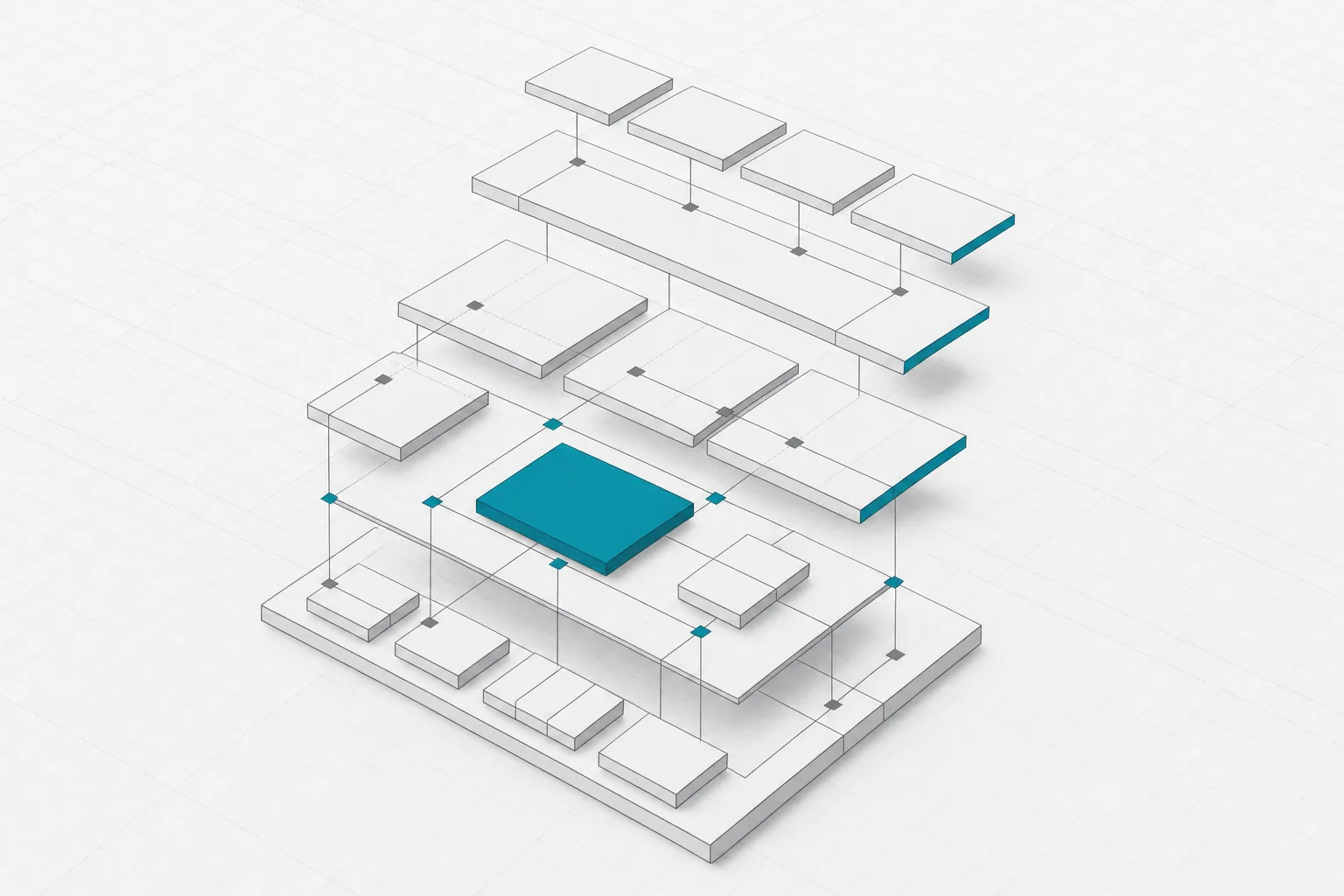
The product is shaped like
Your organizationwallet, settings, admins
Your brandsone or twenty
Your departmentsa module each
Your peoplewith a role
Four layers, top to bottom.
The organization
This is your company.
It owns the wallet, the global settings and the admins. Everything below belongs to it. Working alone? Your account opens as an organization of one, with the same structure.
The brands
One brand or twenty.
A brand is a product line, a market, a subsidiary, whatever you treat as a separate business. Each has a context of its own, enforced in code, so a draft for one brand cannot borrow the voice of another.
The modules
Each module answers the need of one department.
Marketing for the marketing team, Sales for the pipeline, Business Intelligence for the person who needs a number on a Monday. A brand switches on the modules its departments use and leaves the rest off.
The users
People with roles.
People get access to brands and modules, and carry a role that decides what they can do there. An admin can widen or narrow it for one person.
A module per department.
We organized the product around the jobs a company has to get done, not around features.
Marketing
Brand Content
Drafts the work. Social, Search and Ads run the posts, the rankings and the campaigns.
Open Brand ContentOperations
Project Management
Turns findings into boards and timelines with the reason attached.
Open Project ManagementLeadership
Business Intelligence
Answers questions from live numbers and writes the weekly operating review.
Open Business Intelligence
Two brands, one organization.
Buy one module or all of them
The ones you do not switch on are simply not there, and you pay nothing for them. A job none of them covers can be built as a tailor-made agent, and thecatalog lists them.
Roles, not just logins.
Every user carries a role, and the role is what they can do, not a seat tier. Five roles run from super admin to viewer.
Between them sit the people who run a brand, approve content, and operate a module day to day. An admin can then grade one person’s rights up or down, module by module, without inventing a new role.

A content creator drafts
but cannot publish. Someone with approval rights signs off.
An admin sets
model choice, budgets and agent settings for the organization or for one brand.
A viewer reads
on their own credentials and their own budget, so a board member or a client can see reports without touching anything.
Access is granted per brand, per module and per person
A user on Brand A’s Marketing sees nothing of Brand B’s Sales. Roles are documented in full on Security and data.
Settings that inherit.
Agent settings live at four scopes: global, organization, brand and user. Override one field at the brand level and the rest still comes from above.
A large organization runs one module on one brand without a platform-wide rollout, and a ten-person company never has to think about it at all.
Multi-everything by default.
Multi-organization, multi-brand and multi-user are not an enterprise tier. They are the shape of the product.
The day you add a second brand
A single-brand company uses the same structure with one brand in it. The day it enters a second market, it adds a brand. Nothing migrates, nothing is re-bought.
The money follows the structure.
Every AI run is priced and attributed in the ledger to the organization, the brand, the user and the agent that ran it, so spend can be charged back to the brand that used it.
Caps exist at each level, so a brand or a user can be stopped without stopping the company. The full picture is on Cost and control.
Six things you can check.
Start with the department that is most short-handed.
One organization, one brand, one module. The structure is already there for everything you add later.
No subscription. No seat fee. Money in a wallet, spent on tokens, storage and data, and your balance never expires.