

Data integration
Connect the systems. Then make them agree.
For a company whose numbers live in four systems and agree in none. We plug in the systems you already run and prepare the data behind them, so every answer the product gives has a source you can check.
Accessread-only by default
Connectionone to two weeks for a typical stack
Preparationscoped per task, drop any line
Discoveryone call, free, written scope
Pricefixed once the scope is signed
The part everyone skips.
Connecting a CRM takes an afternoon. Making its numbers agree with the ERP takes longer, and that’s the part most AI projects skip.
That’s where they tend to stall. When Informatica asked data officers in 2025 what stood between them and AI, the first answer was data readiness. We do both: plug the systems in, then make the data agree with itself.
Informatica, CDO Insights 2025. Roughly one company in eight. The other seven connect first and discover the disagreements later.
What we connect.
One context, one ledger
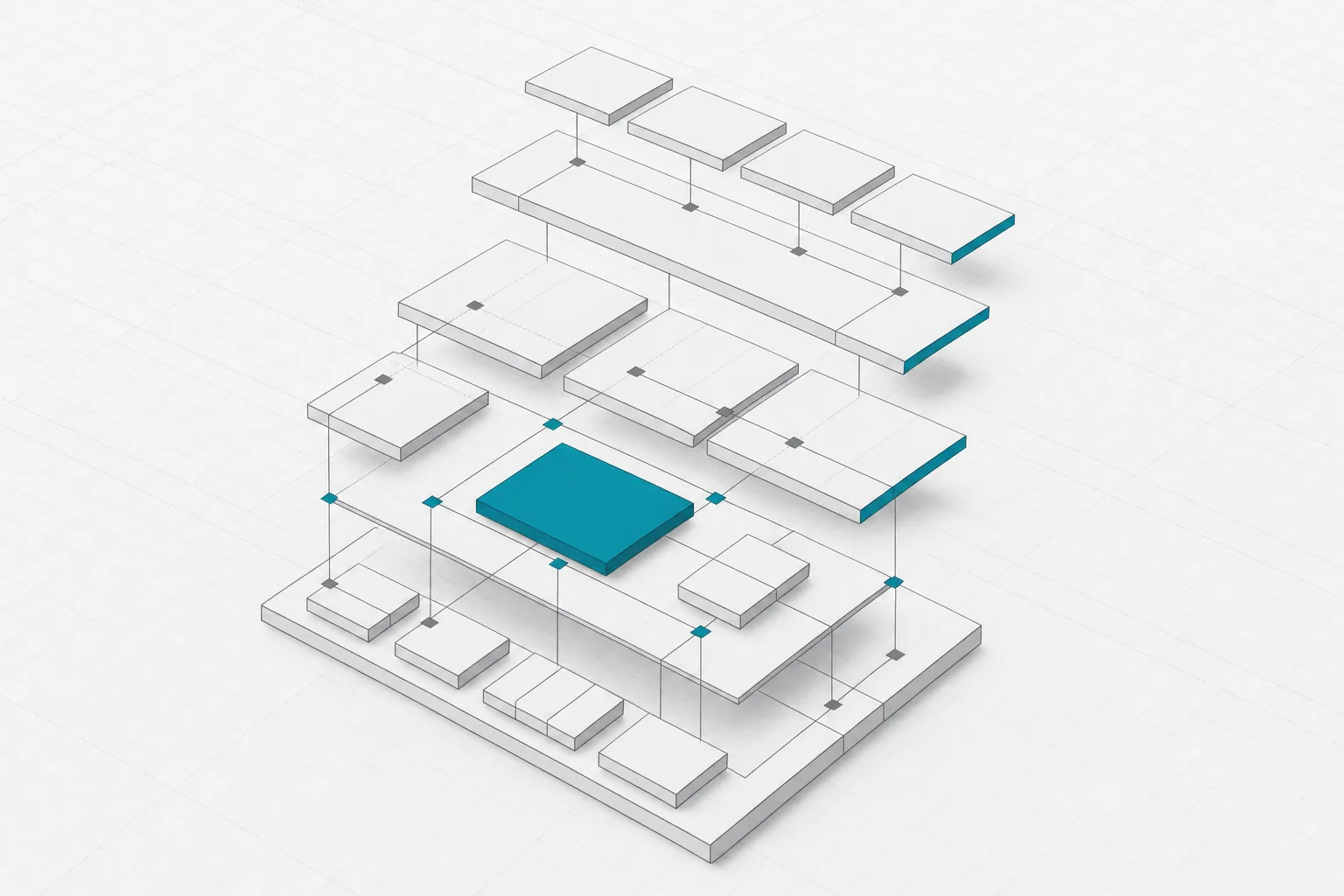
Every connector lands in the same place. Business Intelligence, Sales and the Service Desk read from it.
Read-only by default
Write access, only when a function needs it
A connector gets write access only when a function needs it (the sales module updating a deal stage, say) and only after you approve it, like any other run. Before a connector goes live we run it against a week of your real records and compare its output with yours, line by line.
No usable export
Some systems have none. We tell you on the discovery call rather than after. A system with no connector in the catalog is a job for Custom features.
What we prepare.
One definition per business metric, written down, and agreed by the people who actually use it. “Revenue” means the same thing in the board pack as it does in the sales report.
ERP against CRM, CRM against finance. The usual finding is a customer that exists three times under three spellings, or a deal that closed in the CRM and never reached invoicing. We list every gap and fix what can be fixed at the source.
Lineage on every figure, so when Ask Intelligence quotes one it can name the table and the row.
One customer, three records
Illustrative
The laptop spreadsheet
The spreadsheet the finance lead keeps on a laptop often turns out to be the system of record. We connect that too, and say so in the scope.
How long, and how much.
What we need from you
Admin access to each system, or someone who has it, for the length of the connection work. One person on your side who can say what a metric means. That’s it.
Used by
Business Intelligence needs it first. Sales and the Service Desk read the same connections, so a customer record connected once is there for the pipeline and the support desk as well. Onboarding hands over here when setup finds more than an afternoon’s work.
The scope, then the price
Priced per connector and per preparation task, so you can drop any line. Fixed once signed; it doesn’t draw on your wallet. Data stays in your tenant: Security.
The other things we do for you.
Last revised August 22, 2026
Four systems, one set of numbers.
Book the discovery call. It ends with a written scope, priced per line, and nothing starts until you sign it.
No subscription. No seat fee. Money in a wallet, spent on tokens, storage and data, and your balance never expires.