
Method
AZIMUTH. First a bearing, then proof.
An azimuth is the angle between north and where you are heading. Navigators take one before they move and check it as they go. That is how we run every account: decide where AI is worth pointing, measure where you stand, then measure the difference on a date nobody can argue with.
It fits on one page, on purpose. Every phase lands on something in the product you can open.
Six legs, one bearing, checked as you go
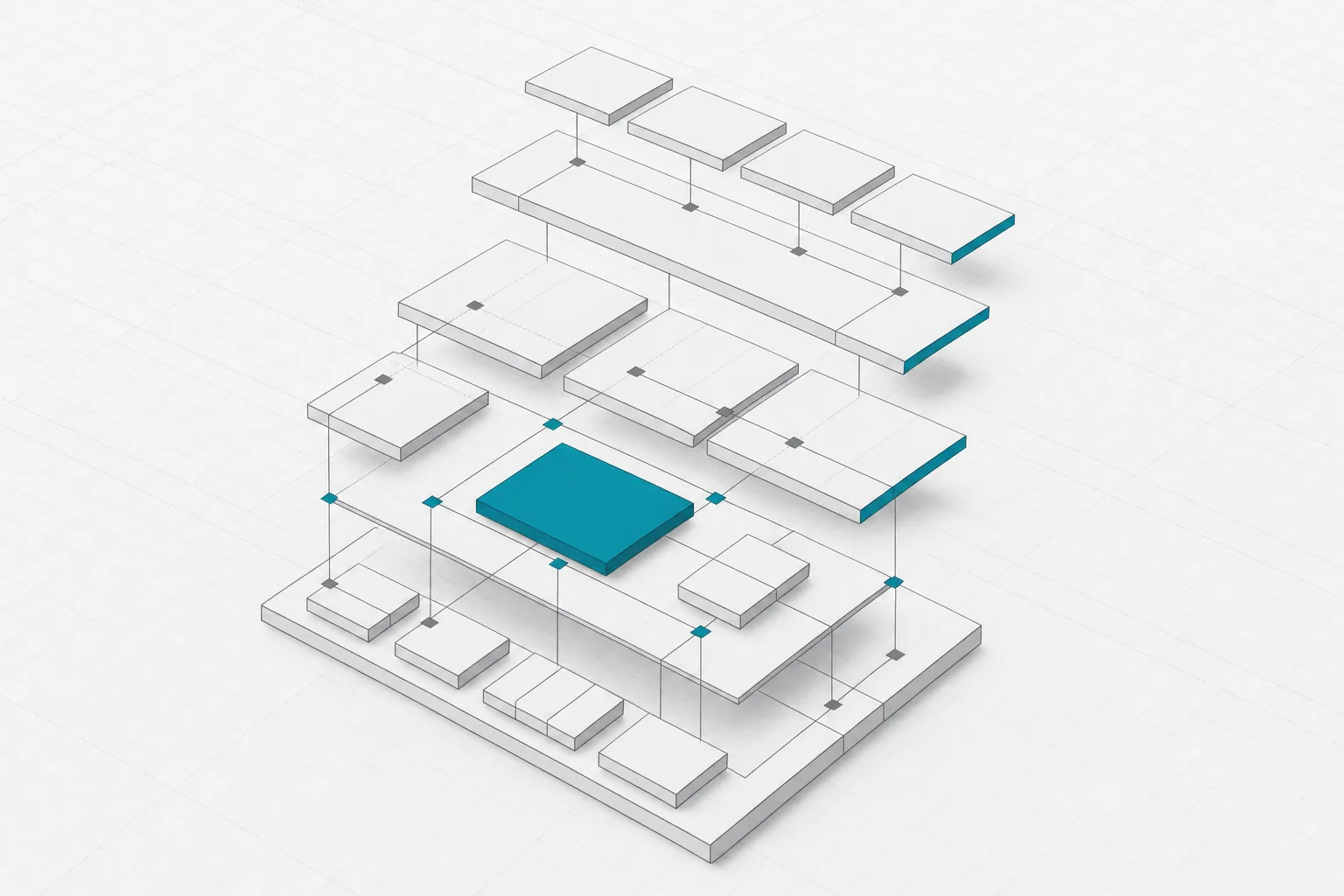
Six legs. The last one is what the other five protect.
Each phase ends in something dated and checkable.
000°
Bearing
Deciding where AI is worth pointing, then writing it down.
We start with the people who own the number: one brand, one function, the figure the P&L already tracks. Then we write it down: the baseline, the success threshold, the timebox, and the kill criterion.
The last one is what most methods skip. We will not.
Five situations, by situationOn your account
- One brand and one module, named
- The number it has to move, in writing
- A kill criterion with a date on it
060°
Data
Finding the data, cleaning it, and connecting it where the agents can read it.
Most AI work stalls here, quietly, so we do it in the open. We find the data the use case needs, judge its state, then connect it read-only, scoped to the brand.
If the data is not there, we say so before a module is switched on.
Data integrationOn your account
- Sources connected read-only, per brand
- The market foundation read before anything is written
- Missing data reported, not worked around
120°
Build
The module goes on, the agents get their job descriptions, the gates go up.
The module goes on for that brand: watchers on their schedule, drafters pointed at the work, approval gates on, a hard cap on the wallet. Every run shows its price before it starts.
The build tests the bearing, not a wish list. New ideas wait.
What the catalog coversOn your account
- The module on, for one brand
- Caps and approval gates set
- A custom feature only where the catalog has a gap
180°
Run
A small, timeboxed pilot on real data, with the people who would use it every day.
Real data, your real team. Drafts arrive, someone with the role approves or rejects each one, and anyone on your side with a login can watch every run: what it read, what it produced, what it cost.
What you learn is whether it holds up in the real workflow, not the demo.
OnboardingOn your account
- Real data, real approvers
- Every run visible to every login
- Three months of free support after onboarding
240°
Fix
The same measurement as the baseline, same method, new date.
A fix is a confirmed position: not where you feel you are, where you are. We rerun the baseline report, same method, and set the two numbers side by side. Then the ledger reconciles the money against real volume.
A module that cannot pay for itself gets switched off.
Cost and controlOn your account
- Two dated reports, side by side
- The ledger as the cost evidence
- Continue, adjust the bearing, or stop, in writing
300°
Scale
Positive return proven, the pilot graduates to the rest of the company.
The phase every other phase is protecting. The bearing was met and the economics held, so the module stays on, the next one gets a bearing of its own, and your team is trained by role to run it.
Short of that: adjust the bearing and run again, or stop, in writing.
Training by roleOn your account
- The next module, on the same ledger
- Training by role, recorded for the next hire
- The keys handed over
Four rules the phases enforce.
Six phases are the shape of the work. Under them sit four rules that do not bend.
A baseline you can date.
Without one, progress is a feeling. The first report on your account is the baseline, and it carries its date.
A metric agreed before the work, not after.
Criteria invented once the results are in will always be met. The bearing is written before a module is switched on.
Costs you can watch as they run.
The economics belong in the evidence, not in a surprise invoice. Every run is priced first and lands on the ledger.
An ending where you no longer need us.
Every engagement hands your team the keys. No dependency built in on purpose.
These four rules have not changed since we wrote them down.
We did not design this in a workshop.
AZIMUTH grew engagement by engagement, out of failures we watched from inside marketing and technology leadership.
Then we ran our own company on the same rules, and the method had to survive a real P&L, which was ours.
See where we said noWhat sank the projects
- The pilot with no baseline
- The success metric invented after the numbers came in
- An AI budget nobody could reconcile
- The build that ran for months before anyone checked whether the data existed
Every phase ends on a page you can open.
None of this asks to be believed. Each phase resolves to a page you can check.
Checked against the product on August 25, 2026.
- OnboardingYour account set up with you and your team trained, in at least four hours.See onboarding
- Case studiesThe fix, months later: figures the client verified, and the modules that got switched off.Read the fix
- Cost and controlThe caps, the price before the run, and the ledger every phase reports from.Open cost and control
Take a bearing on one module, one brand.
Open an account and the first four phases run inside a week. Or talk to us first; if AI is not your next move, you will hear that too.
No subscription. No seat fee. No card required to open an account.