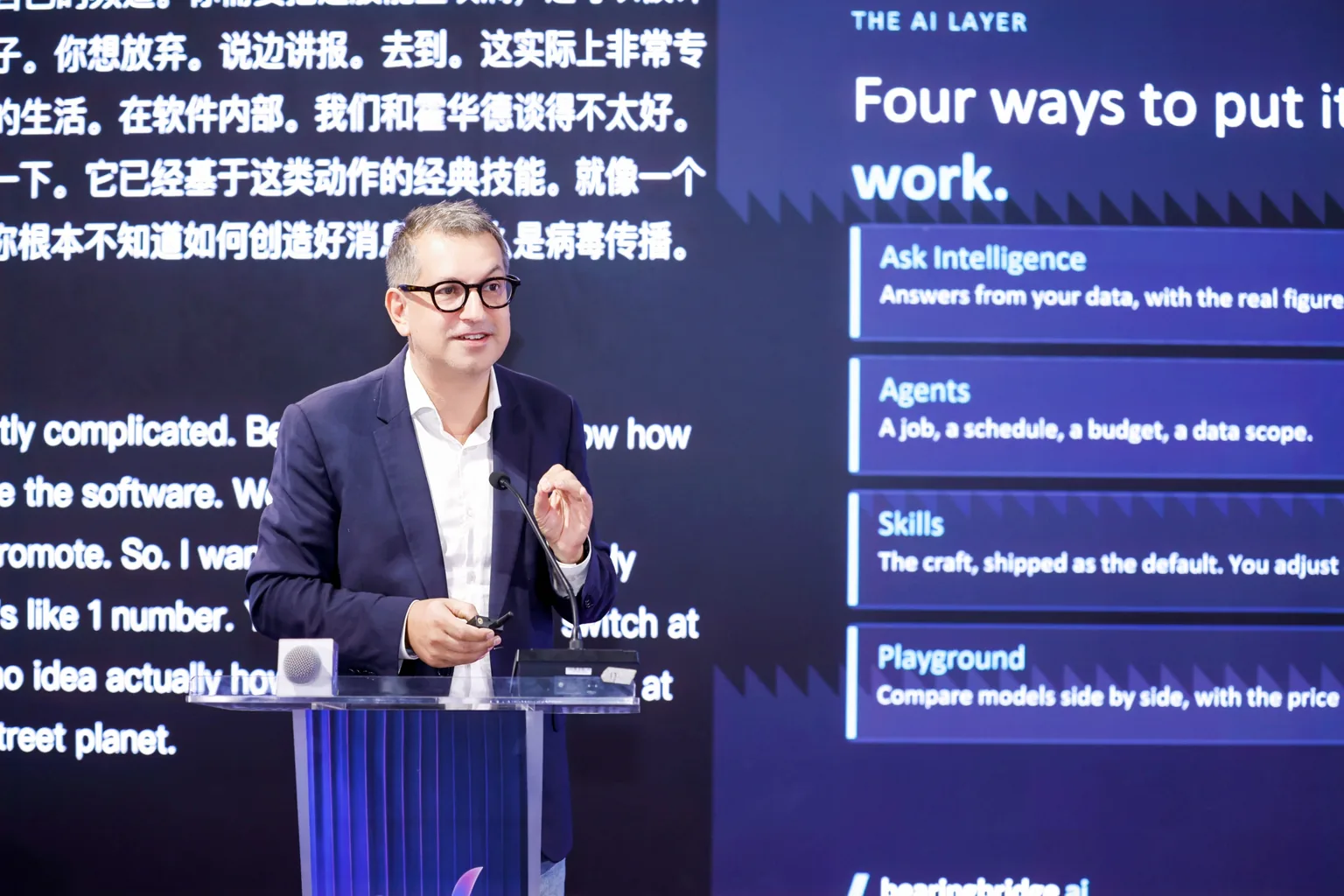
This week I presented BearingBridge at Waveyoung, the China Europe innovation forum. The organizers selected us to represent innovation between the two continents, which is a heavy title for a company whose whole point is to make work lighter.
The audience mixed business leaders from China, business leaders from Europe, and researchers from Tongji University. So I prepared two talks in one. The Chinese version was fast and built around execution. The European version was careful and built around control.
I prepared two talks. I only needed one.
The same question in two accents
The questions after the talk came from both sides of the room, and they were the same question. How fast can a small company put AI to work, and what does it cost before anything works?
A Chinese founder asked it in terms of speed. A European founder asked it in terms of risk. Underneath, both were asking whether a team of five can do the work of a team of twenty without hiring the other fifteen.
That is the question BearingBridge was built to answer, so it was a good afternoon.
What we showed on stage
The talk walked through the three parts of the product:
- Studio: AI visuals, video and content creation.
- Growth: digital marketing, market expansion and sales.
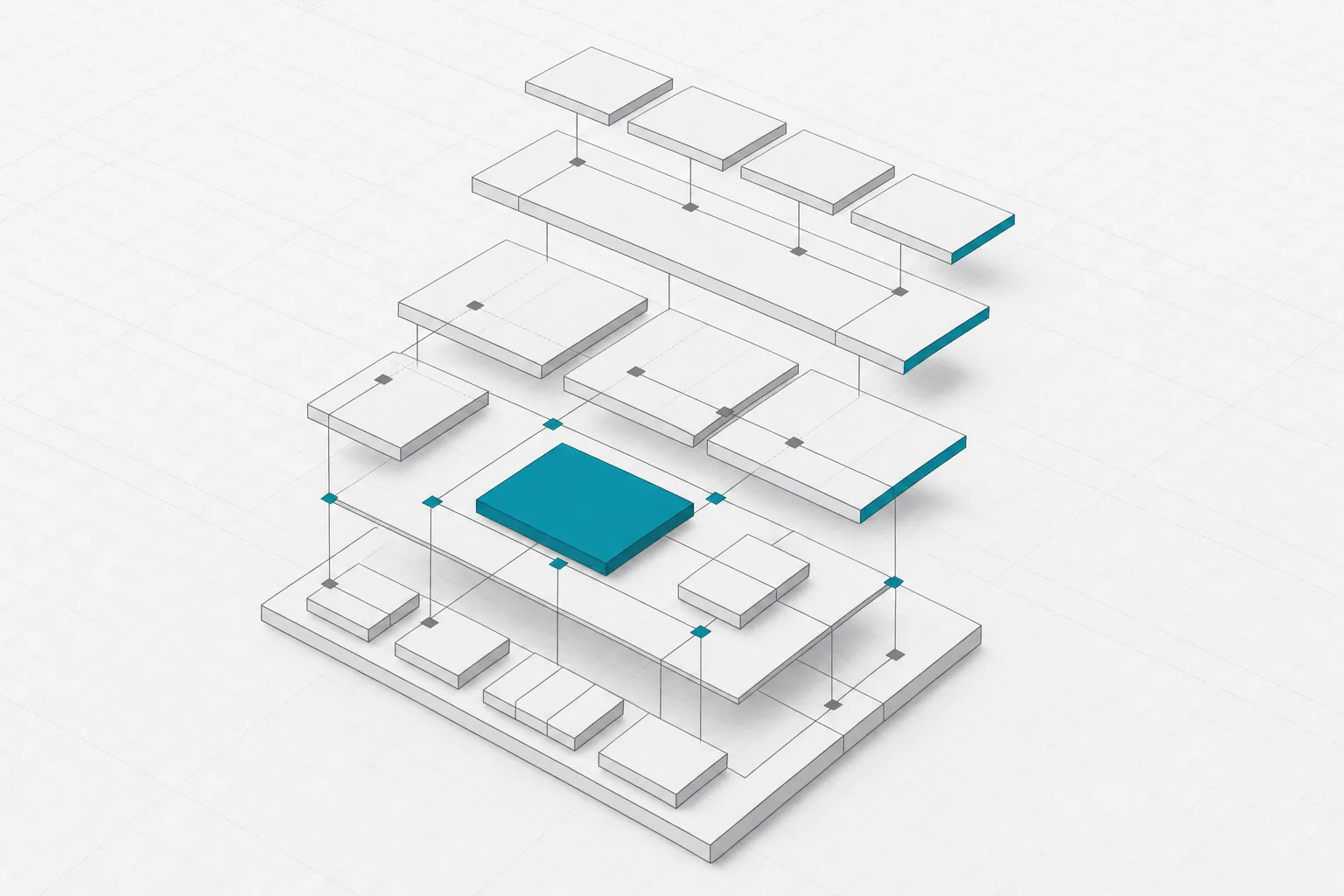
- The AI layer: Ask Intelligence for answers from your own data, Agents with a job, a schedule, a budget and a data scope, Skills that ship the craft as the default, and a Playground to compare models side by side with the price in view.
The line from our booth that people kept repeating back to me was the simplest one: meet your AI team in three minutes. Free to open, pay only for what you use.
Why the bridge matters
Small companies on both continents hit the same wall. The software is built for large companies, priced per seat, and sold through purchasing processes a ten person team does not have. A company in Shanghai and a company in Lyon lose the same week trying to set it up, and then lose another month waiting for the hire who was supposed to run it.
BearingBridge removes that week. You open an account, meet the team, and start.
What a small team hands over on day one
The best signal came after the stage lights went off. Chinese and European SMEs are now onboarded with BearingBridge, and the first jobs they hand over are the ones every small team drowns in:
- Social: the week’s posts written, illustrated and scheduled on LinkedIn, X, Facebook, Instagram and TikTok, on one calendar, sent from the company’s own accounts.
- Prospecting: prospect lists and email sequences sent from the company’s own Gmail or Outlook, stopping on the first reply.
- Customer service: a desk on the website that answers from the company’s own documents only, says when it doesn’t know, and runs on a budget the company sets.
- Ads: Google Ads and LinkedIn Ads read live, with AI keyword research and changes suggested before anything is applied.
- Sales: a pipeline where every deal carries a next step and every amount shows in two currencies, which matters when the buyer is in Shenzhen and the seller in Lyon.
- Answers: questions asked of the company’s own data, answered with the real figures.
Take a Shanghai skincare brand preparing its first season in France, or a Lyon machine maker looking for distributors in China. Different continents, same wall: too much work, too few people, and tools priced for companies ten times their size. They get the same team and the same three minutes to start.
Standing on the bridge
In my work between China and Europe, the gap I see most often has nothing to do with language. It is the gap between what a small company wants to do and the number of people it can pay to do it.
Waveyoung put both sides of that gap in one room. They asked one question, and they got one answer.
That is the bridge I came to describe. It was good to watch people walk across it.