A scenario, told by a marketing lead in a twelve person team. The steps are the app’s own, as the app and the BearingBridge help center show them on November 1, 2026.
The job, and why it hurt
A competitor put out a public announcement on a Monday morning. By lunch our director asked: what does it change for us, and how does it compare with what we say about ourselves?
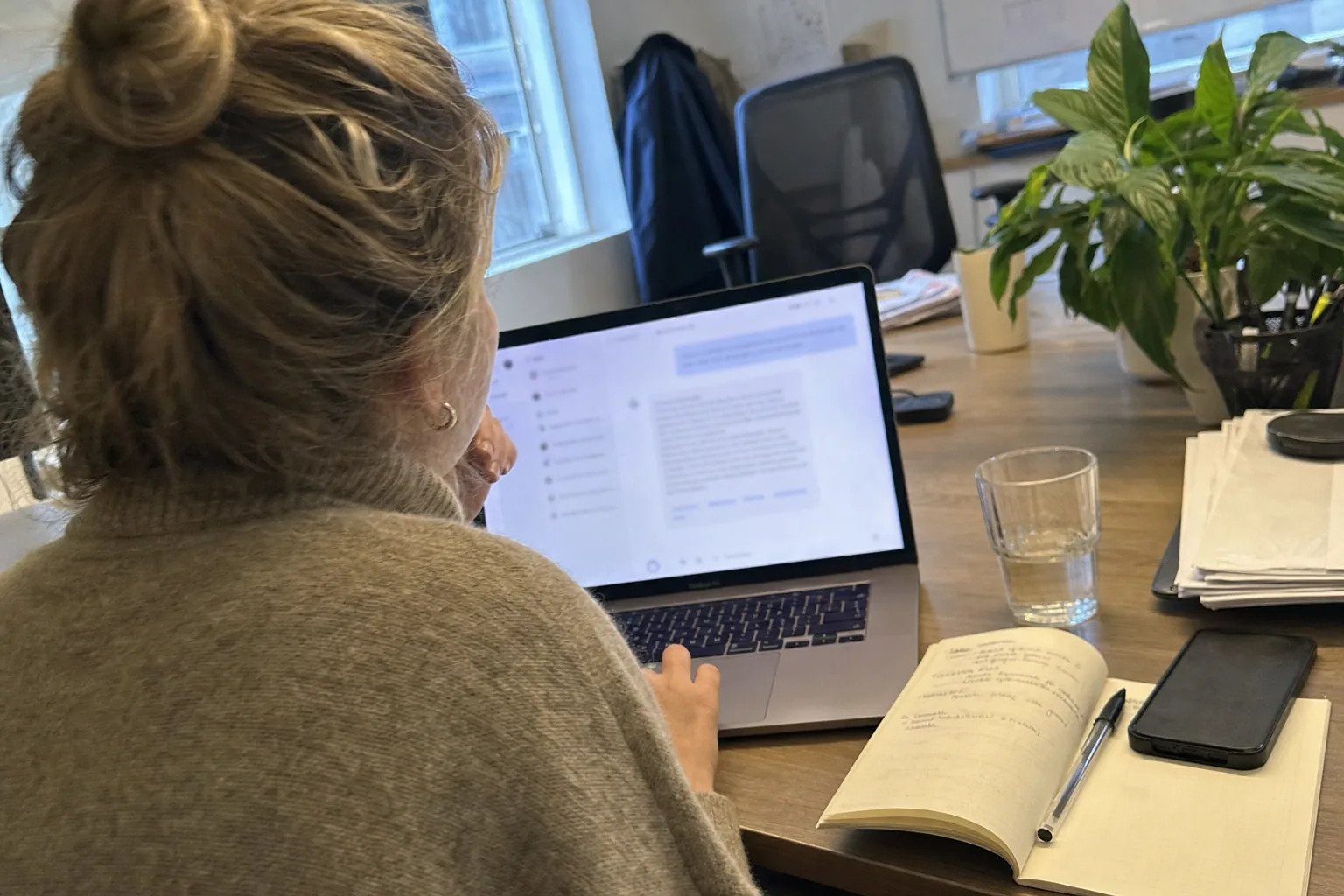
Half the answer was on the web, in the competitor’s own pages and the press. The other half was in our app: our positioning, our content, our keywords. I searched one side, then the other, and pasted it all into a document. A general AI chat could sum up the news, but I couldn’t tell which line came from a real page and which one it had made up.
I wanted one question, an answer that kept the two sides apart, and every source in sight.
What I did in BearingBridge
Turn web search on for this conversation
On the Ask Intelligence page, the toolbar above the conversation holds Web search, the model and Use a skill. Web search reads OFF when the page opens. I switched it ON for this conversation only.
The model list then kept only the models that run a search of their own. When I had picked one that can’t, the reason was written next to the switch, and turning it on moved the conversation to a model that searches.
Our organization allows web search, as every organization does unless an administrator turns it off on the AI Models page.
Set how far it may search
While the switch is on, Searches per answer, up to sets the ceiling, from one to six. It starts at one. Each search is charged, and the pages it brings back add tokens. I set three for this question. The price of a search depends on the model, and there’s no quote before you ask, so a low ceiling is the simplest way to keep a question cheap.
Ask the question
I asked what the competitor had just announced and how it compared with the positioning in our brand profile.
The answer kept two worlds apart:
| Part of the answer | Where it comes from |
|---|---|
| The announcement, its date, its terms | Pages read on the web |
| Our positioning and our content | Our own data in the app, never the web |
| A figure about us missing from our data | Said to be missing, never filled in from the web |
Under it, From the web: listed the sites it used as links, the pages it actually opened first. Based on: named the parts of our app it read. It had used two of its three searches: the cost line started with “2 web searches”, and the price shown, taken from the wallet like any other answer, included them.
Find it again
Every conversation is saved. In Previous conversations, a web tag marks the ones with search on. I renamed this one after the competitor so I could find it again. Reopening it brought back the answers, the links, the costs and the switch, and cost nothing.
The result
I sent our director the answer and its links before the afternoon meeting. Each claim about the competitor pointed to a page anyone could open. What it said about us came from our own data.
My next question was only about our own keywords, so I switched web search off. That answer came from our data alone, with no search on the bill.
The video below walks through the same routine in the app.